The Complete Resource
The Complete Buyer's Guide to Stainless Steel Landscape Edging
If you're serious about clean, permanent garden borders, stainless steel landscape edging is the material that delivers. This guide covers everything you need to make a confident buying decision — from understanding why grade 304 stainless outperforms every alternative, to choosing the right product, planning your installation, and knowing exactly what to expect over the long term.
What Is Stainless Steel Landscape Edging — and Why Does the Alloy Grade Matter?
Stainless steel landscape edging is made from a low-carbon steel alloy that contains a minimum of 10.5% chromium by mass. This chromium content is the defining characteristic: when chromium is exposed to oxygen, it forms an invisible, self-renewing chromium oxide layer on the surface of the steel. This passive film is the reason stainless steel resists rust — and crucially, if the surface is scratched, the passive layer regenerates spontaneously when oxygen is present again.
This is a fundamentally different corrosion mechanism from painted or galvanised steel, where a separate surface coating provides the only barrier against rust. The moment that coating is compromised — by installation damage, UV degradation, soil abrasion, or simple age — the underlying bare steel begins to rust aggressively. Stainless steel garden edging has no such vulnerability. The corrosion resistance is built into the alloy at the molecular level.
Not all stainless steel is the same, however, and the grade specification matters considerably for outdoor landscape applications.
Grade 304 vs Grade 316: Which Is Right for Garden Edging?
Grade 304 Stainless Steel
Grade 304 is the most widely produced stainless steel in the world, accounting for roughly half of all stainless output globally. It contains 18% chromium and 8% nickel, giving it excellent corrosion resistance across the full range of garden environments — including high humidity, consistent rainfall, soil acids, irrigation water, and freeze-thaw cycling. For the vast majority of residential and commercial landscape applications across the United States, grade 304 stainless lawn edging offers more than adequate long-term performance.
Grade 316 Stainless Steel
Grade 316 adds 2–3% molybdenum to the 304 composition, which provides enhanced resistance to chloride-induced corrosion — the type caused by saltwater. This makes 316 the preferred specification for true marine environments where the edging would be directly exposed to salt spray. For the overwhelming majority of garden applications, including those in coastal regions that aren't within direct spray distance of breaking surf, grade 304 garden edging stainless steel performs identically to grade 316 at meaningfully lower cost.
Buyer tip: When evaluating stainless steel path edging or lawn edging products, always look for explicit declaration of the alloy grade — 304 or 316. Products that simply describe themselves as "stainless" or "rust-resistant" without a grade specification may be lower-chromium alloys that don't offer the same long-term performance. Our product is certified grade 304.
Stainless Steel Garden Edge vs Other Edging Materials: An Honest Comparison
Choosing the right landscape edging material is a longer-term decision than it might appear. The right choice at the point of purchase can eliminate the need to ever repeat it; the wrong one leads to repeated cost and frustration. Here's how stainless steel landscape edging stacks up against every major alternative.
Stainless Steel Landscape Edging vs Plastic Edging
Plastic garden edging is the most common choice for budget-conscious buyers, and consistently the most disappointing one over time. The two primary failure modes are UV degradation — which makes the plastic brittle within 2–5 years in most climates — and thermal movement, where repeated freeze-thaw cycling causes the plastic to migrate out of position, rise above grade, and eventually crack. Stainless steel grass edging experiences none of these failure modes. It doesn't degrade in UV, doesn't shift through temperature cycling, and doesn't lose structural rigidity over time. When you calculate the cost per year of service life, stainless steel is nearly always cheaper than plastic.
Stainless Steel Lawn Edging vs Aluminium Edging
Aluminium edging is a meaningful step up from plastic — it's lightweight, corrosion-resistant, and doesn't rust. However, aluminium's relatively low modulus of elasticity means it deflects more easily under lateral soil and root pressure, particularly at section joints, producing the characteristic waviness that undermines the purpose of having a defined border. Stainless steel garden edging is substantially stiffer, holds its line under sustained pressure, and doesn't develop the white surface oxidation that aluminium can produce in certain acidic or alkaline soil conditions. For precision edging that stays where you put it, stainless is the stronger specification.
Garden Edging Stainless Steel vs Corten (Weathering Steel) Edging
Both stainless steel and corten (weathering) steel are premium, long-life edging materials — but they serve different aesthetic briefs. Corten develops a warm, rich rust-coloured patina that deepens over time, making it ideal for naturalistic, organic, or rustic garden styles where the material's evolved character is part of the design. Stainless steel landscape edging maintains a bright, clean silver finish (gradually softening to a satin sheen) that suits contemporary, minimalist, formal, and architectural garden designs. There's no functional winner between the two — the choice comes down to the visual palette you're working with.
Stainless Garden Edging vs Painted Steel Edging
This is the comparison that matters most for buyers evaluating similar-looking products at different price points. Painted or powder-coated steel edging looks professionally finished at the point of purchase, but its long-term performance is entirely dependent on the integrity of its surface coating. Installation alone — driving the edging into the ground, cutting to length, handling in transit — creates micro-abrasions in the coating. Within a few seasons, these breaches allow moisture to penetrate to the bare steel beneath, triggering the accelerating rust cycle that characterises corroded painted edging. Stainless steel lawn edging has no coating to breach. It's the structurally superior choice for long-term performance.
How to Choose the Right Stainless Steel Landscape Edging for Your Project
Understanding what to look for before you buy helps you avoid the most common purchasing mistakes and ensures your installation delivers the results you're after.
Steel Gauge and Strip Height
Gauge Selection
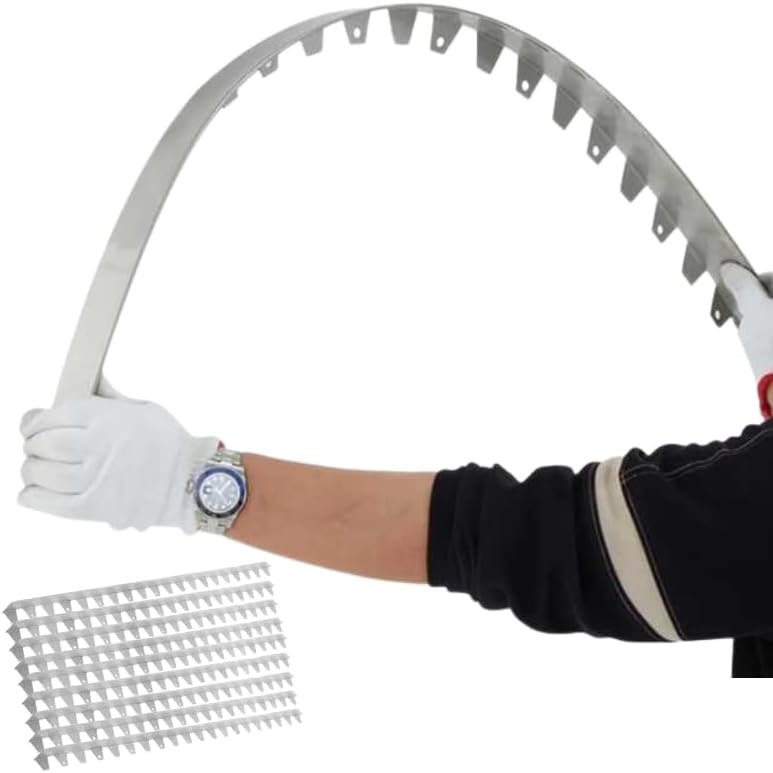
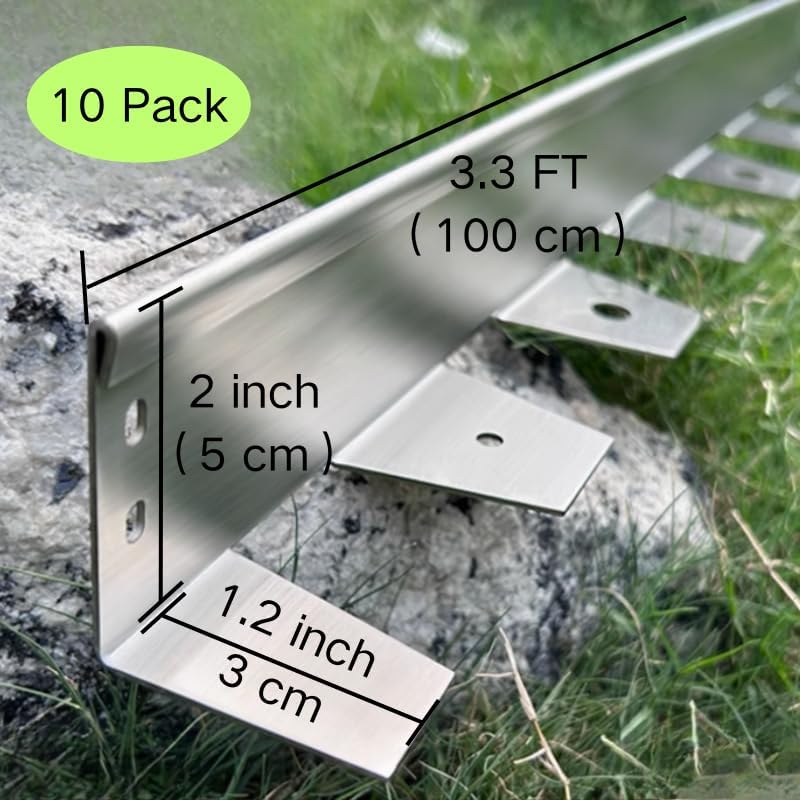
Gauge refers to the thickness of the steel strip. For stainless steel metal edging landscaping, the gauge needs to balance two requirements: enough rigidity to hold a firm edge under soil pressure, and enough flexibility to allow smooth curves by hand without specialist tools. Too thin and the edging flexes and migrates; too heavy and it becomes difficult to shape and install. A good general-purpose gauge for residential landscape edging allows smooth hand-bending for curves of around 12 inches radius or greater while holding a firm, upright position once staked.
Visible Height
The visible height of installed stainless steel grass edging determines how much of a physical barrier it creates between zones. Taller edging contains deeper mulch beds more effectively and provides a more pronounced visual definition. Standard heights for residential applications are typically in the range of 3–5 inches above grade, which provides clean visual separation between lawn and bed without dominating the planting visually. Consider how deep your mulch or gravel layer is — the edging should be at least as tall as the material it's containing.
No-Dig vs Trench Installation Systems
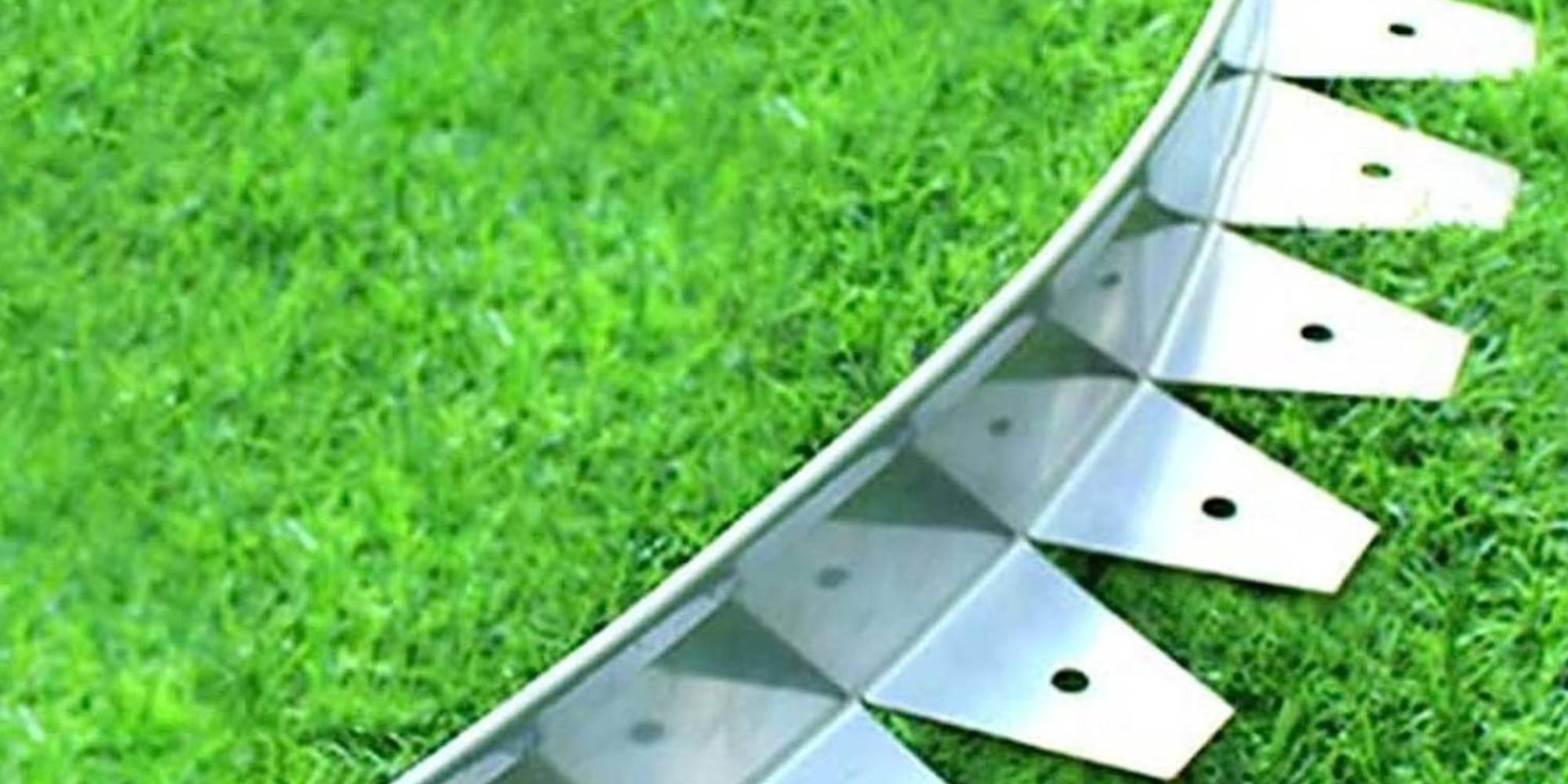
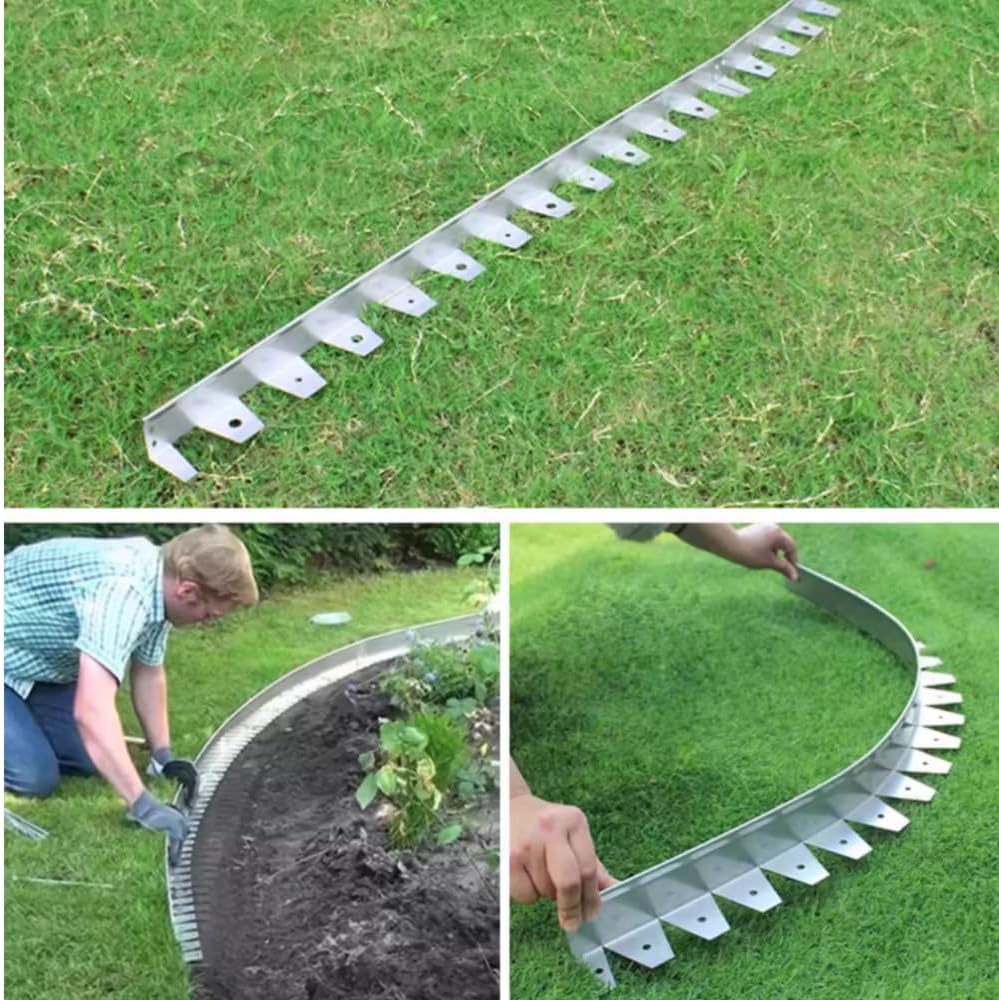
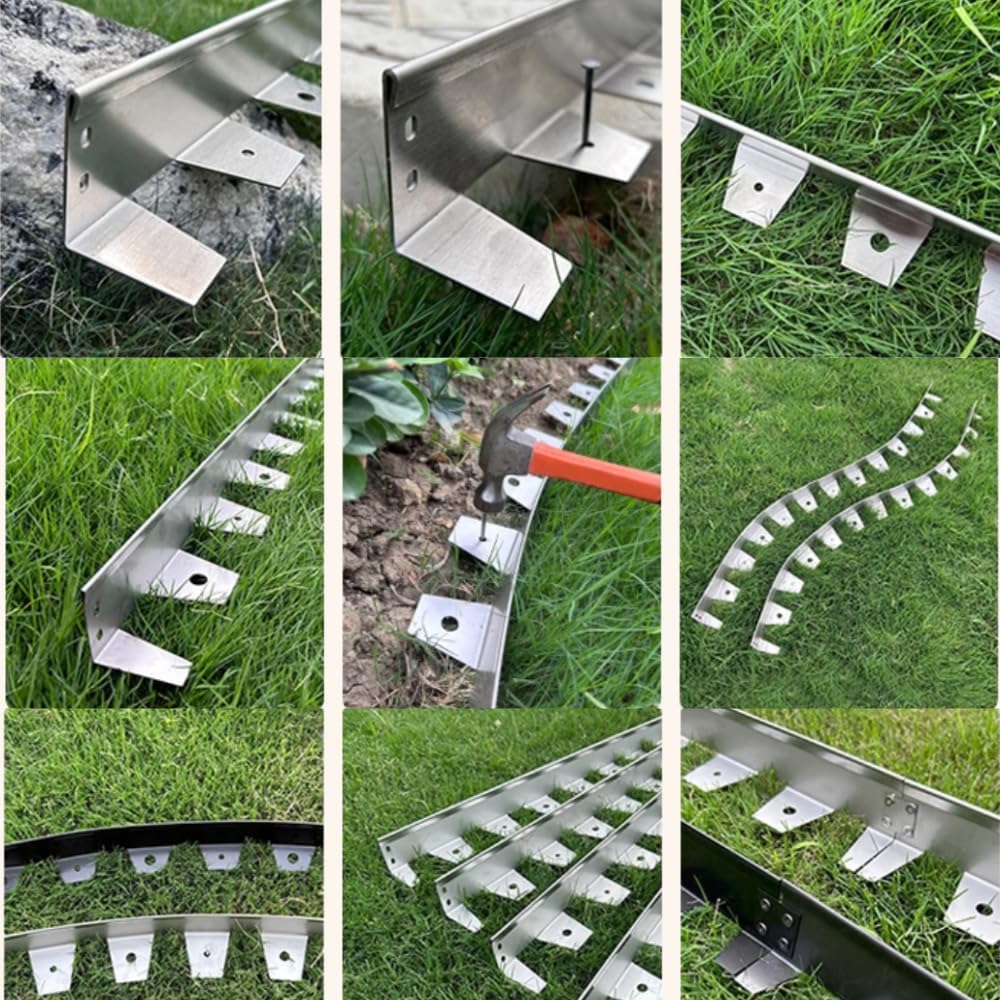
Stainless steel path edging products fall broadly into two installation categories. Trench-style edging requires a narrow spade cut to be made first, the edging inserted into the slot, and the soil firmed back around it — a more labour-intensive process that produces a very stable result, particularly in loose soils. No-dig edging — like the product on this page — uses pre-drilled holes and included stakes that are driven directly through the strip into undisturbed ground. For the vast majority of residential applications, no-dig installation is faster, equally stable in normal soil conditions, and doesn't require any special tools or ground preparation.
Connector System Quality
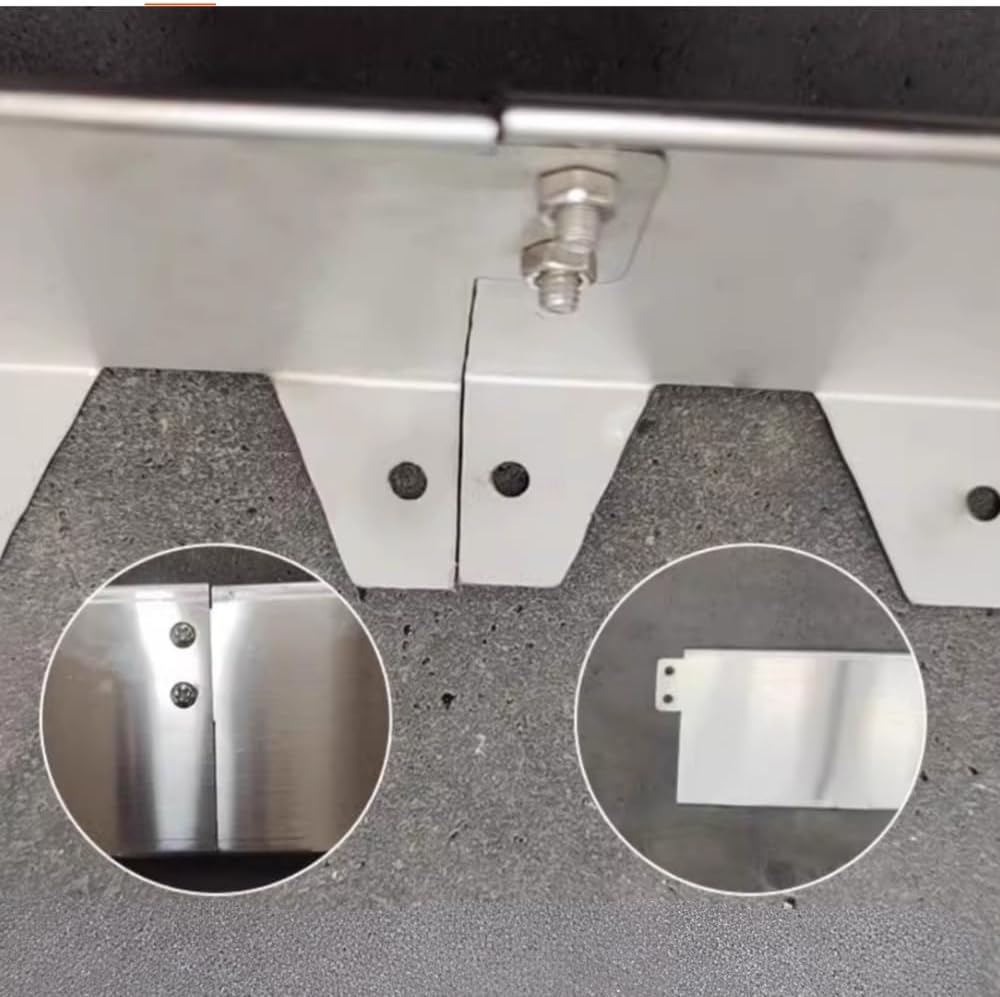
Where individual strips of stainless steel landscape edging join, the quality of the connector system determines whether you get a seamless, flush border or a visible, potentially weak joint. Look for metal connector plates (ideally the same stainless steel specification as the edging itself) that overlap both strip ends and are fastened with stainless screws and nuts rather than clips or adhesives. Metal-on-metal fastening holds under ground movement; clips can fatigue and fail.
Coverage Planning
Before ordering any garden edging stainless steel, measure the full perimeter of your intended installation and add 15% to account for curves (which consume slightly more linear material than a direct measurement suggests), corners, and any cutting waste. It's always easier to have a small surplus than to run short mid-installation. For projects requiring more than one pack, order all packs at the same time to ensure consistent material from the same production batch.
Step-by-Step Installation Guide for Stainless Steel Garden Edging
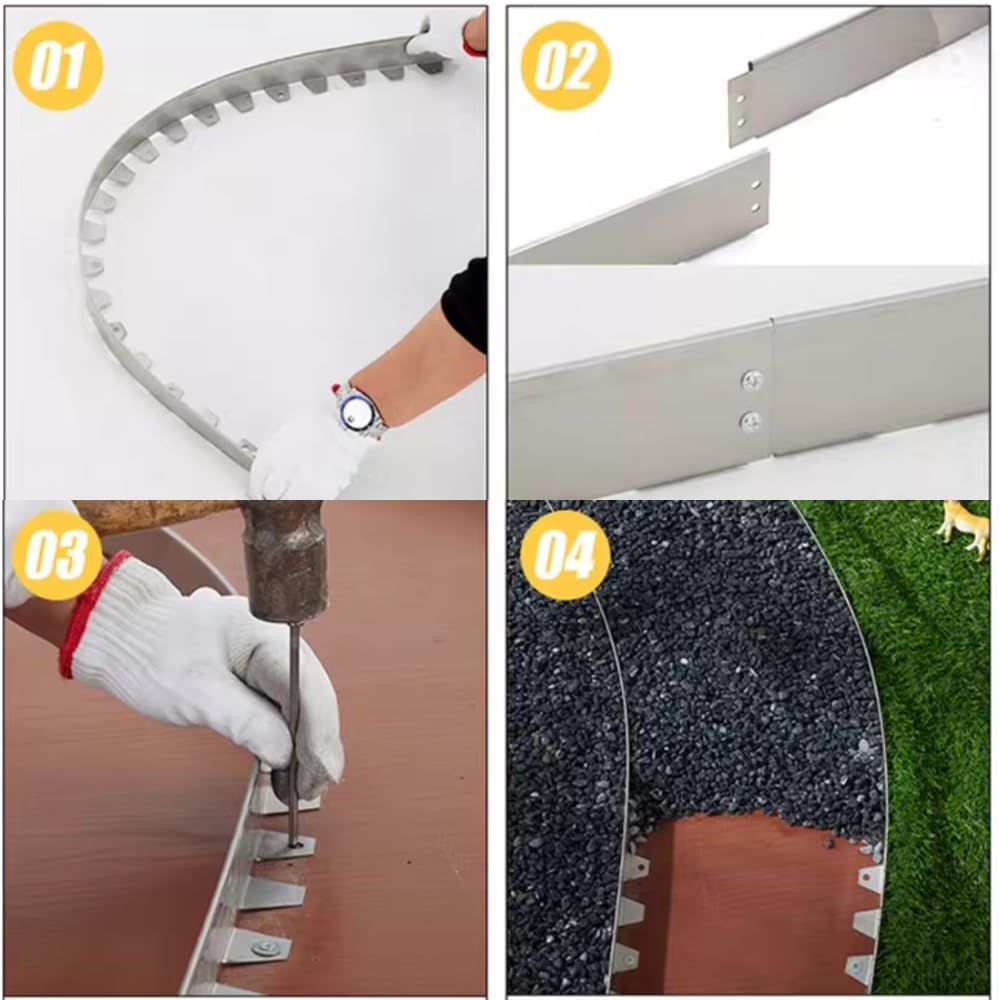
The no-dig installation process for stainless steel lawn edging is genuinely straightforward when approached methodically. The following sequence applies to the vast majority of residential border projects.
Step 1 — Mark Your Border Line
Before touching a single strip of stainless steel landscape edging, define your border precisely. For straight runs — alongside a path, driveway, or formal bed — use garden stakes and a taut string line. For curved borders, lay a garden hose along the ground and adjust it until you're satisfied with the shape; the hose acts as a flexible template. Mark the final line with chalk powder, horticultural sand, or a line-marking spray. Time spent here produces significantly better results downstream.
Step 2 — Prepare the Ground
The no-dig system doesn't require excavation, but a quick check along your marked line is worthwhile. Clear any large stones, buried roots, or compacted debris that might deflect the stakes as you drive them. In very hard, dry ground, watering the soil the day before installation softens the surface and makes driving the stakes significantly easier and more accurate.
Step 3 — Position and Anchor the First Strip
Place the first strip of stainless steel garden edging along your marked line, face-side outward. Drive the first fixing stake through the nearest pre-drilled hole using a mallet, checking vertical alignment as you go — the strip should sit perfectly upright, not angling into or away from the bed. Continue driving stakes along the strip's length, working from one end to the other. For curved sections, apply hand pressure to bow the strip before staking to maintain a smooth, even curve.
Step 4 — Connect Additional Strips
Butt the end of the next strip against the installed strip and position the connector plate over both ends. Thread the screws through the connector holes, add the nuts, and tighten to create a firm, flush joint. Continue along your border, checking alignment against your string or hose guide every strip or two. The rigidity of stainless steel grass edging makes alignment adjustments easier to make as you go than after installation is complete.
Step 5 — Finish and Dress
Once all stainless steel path edging is in position, backfill any gaps along the outer face with soil and firm gently. On the bed side, dress mulch, gravel, or soil up to — but not over — the top edge of the installed edging. The contrast between the crisp steel line and the surrounding material creates the clean, professional border effect that makes stainless steel lawn edging so satisfying to install.
Design Applications: Where Stainless Steel Grass Edging Works Best
The versatility of stainless steel landscape edging makes it a genuine all-rounder across garden types and layouts. Understanding where it performs best helps you plan a project that delivers maximum visual and functional impact.
Lawn and Flower Bed Separation
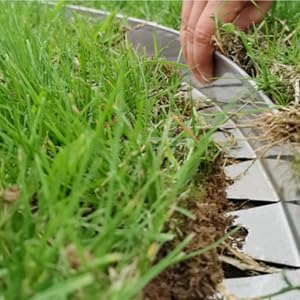
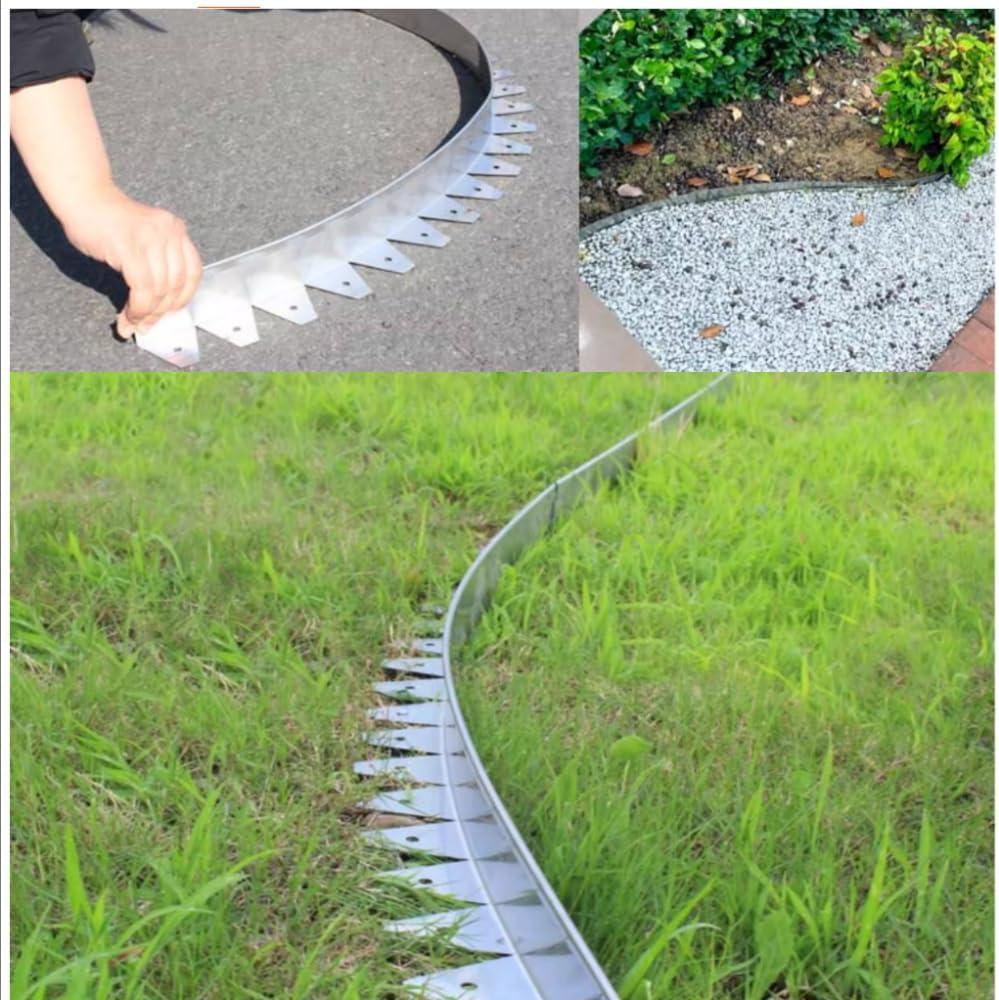
The foundational application for stainless lawn edging. A clean steel edge between lawn and planting bed eliminates the need for manual edging — one of the most time-consuming routine garden maintenance tasks — by creating a physical barrier that grass cannot penetrate. The edge also guides the mower wheel, making mowing faster and neater. Over the course of a typical lawn maintenance season, this time saving alone justifies the investment.
Pathway and Driveway Edging
Stainless steel path edging alongside gravel or stone pathways serves a dual function: structural containment that prevents the gravel from migrating onto the lawn, and a visual framing element that elevates the entire pathway aesthetic. The bright silver of fresh stainless steel creates a striking contrast against warm gravel tones and dark stone — an intentional design feature, not a byproduct of the material choice.
Tree Rings and Specimen Planting Surrounds
Circular tree rings and specimen planting circles are an excellent application for garden edging stainless steel because the material's hand-bendability allows precise curves. A neat circle of stainless steel around the base of a feature tree or large specimen shrub eliminates the visual ambiguity of a free-form grass boundary while giving a defined mulch zone that retains moisture and suppresses competition.
Rock Gardens and Gravel Zones
Decorative gravel and rock garden areas require reliable material containment to stay defined over time. Stainless steel metal edging landscaping provides the clean line that separates gravel from lawn, gravel from planted areas, or different gravel colours from each other — without the edge itself drawing visual attention away from the planting and stone display.
Raised Bed Surrounds and Vegetable Gardens
As a finishing border around the base of raised planting structures, stainless garden edging defines the transition between the bed and surrounding lawn or path. Because grade 304 stainless steel is food-safe and chemically inert, it's entirely suitable for use adjacent to vegetable and herb gardens without any concern about leaching or soil contamination.
Long-Term Performance: What to Expect from Stainless Steel Lawn Edging Over Time
Understanding what happens to stainless steel landscape edging over months and years helps you set the right expectations and get the most from your investment.
The Finish Evolution
Fresh stainless steel garden edging has a bright, mirror-adjacent finish that reflects light and makes a strong visual statement in the landscape. Over the first 12–18 months of outdoor exposure, the finish naturally transitions to a slightly softer, more satin appearance as the passive oxide layer matures and minor weathering occurs. This is not deterioration — it's the normal aesthetic evolution of the material. Most gardeners find the mature, brushed-steel appearance integrates more naturally with the landscape than the initial bright finish.
Structural Performance
Grade 304 stainless steel lawn edging maintains its structural integrity indefinitely under normal garden conditions. Unlike painted steel, there is no weakening mechanism at work — no coating to fail, no progressive rust to compromise the base material, no degradation from UV exposure. The same stainless steel edging installed today will hold the same edge with the same rigidity in fifteen years as on the day it was installed.
Soil and Plant Interaction
Stainless steel is chemically inert in soil conditions — it doesn't leach metals, alter soil pH, or affect microbial activity in the surrounding growing medium. Over time, the edging may develop minor surface deposits of soil minerals or organic material on the soil-facing side, which can be cleaned with a stiff brush and water if desired. This is entirely cosmetic and has no effect on performance.
The cost-per-year calculation: Plastic edging replaced every 4 years at $30 per 33ft costs $7.50 per year. Aluminium edging lasting 15 years at $60 costs $4 per year. Grade 304 stainless steel garden edging at $99, with a realistic service life of 30+ years, costs under $3.30 per year — and may never need replacing at all. The premium material is demonstrably the most economical choice when measured correctly.
Is Stainless Steel Landscape Edging Right for Your Garden? A Final Summary
Stainless steel landscape edging is the right choice for any gardener or homeowner who values precision, permanence, and a clean aesthetic — and who is done replacing inferior edging every few years. Whether you're defining a formal rose garden, creating clean lines in a contemporary minimalist space, or simply wanting the lawn to stop creeping into your flower beds once and for all, stainless steel grass edging delivers the result you're after without compromise.
At $99 for a complete 33-foot kit — including every stake, connector, screw, and nut required for a full installation — this represents the most cost-effective professional-grade edging solution available to residential gardeners. No digging, no professional installation, no ongoing maintenance, and no replacement costs on the horizon.
For the garden that deserves a border built to last — the choice is stainless steel.