The Complete Resource
The Complete Buyer's Guide to Corten Steel Edging
If you're considering corten steel edging for your landscape, this guide covers everything you need to make a confident, informed decision — from understanding the material itself to choosing the right product, planning your installation, and knowing what to expect over the long term.
What Is Corten Steel Edging — and Why Has It Become the Gold Standard?
Corten steel edging — also referred to as weathering steel edging, cor ten steel landscape edging, or core 10 steel edging — is one of the most significant advancements in landscape material science of the past century. The alloy was originally developed in the 1930s by US Steel Corporation, which trademarked it under the name "COR-TEN" — a contraction of corrosion resistance and tensile strength. What set it apart from ordinary structural steel was a precise blend of copper, chromium, nickel, and phosphorus that fundamentally changed how the metal responded to oxidation.
In ordinary steel, surface rust is destructive: it's porous, unstable, and allows atmospheric moisture to continuously penetrate to fresher metal beneath. The process accelerates over time, eventually compromising the steel's structural integrity. Corten steel reverses this dynamic entirely. When exposed to moisture and oxygen, the alloy forms a tightly bonded, chemically stable oxide layer — the patina — that adheres so firmly to the surface that it becomes the primary barrier against further corrosion. Rather than deteriorating, the patina actually grows denser and more protective over time.
For landscape applications, this has profound implications. Corten steel garden edging doesn't require painting, sealing, galvanising, or any form of surface treatment to remain structurally sound for decades. The patina that develops is not a sign of failure — it's the product performing exactly as engineered. This is why professional landscape architects and garden designers overwhelmingly specify weathering steel edging for high-value projects: botanical gardens, award-winning private gardens, commercial plazas, and public parks all routinely use corten because it combines structural reliability with a visual quality that simply cannot be replicated by other materials.
The Visual Case for Corten Garden Edging
Beyond the engineering, there's an aesthetic argument for corten steel landscaping that's equally compelling. The warm, earthy rust tones — progressing from amber orange to rich sienna to deep brown — complement virtually every planting palette. Against dark bark mulch, the contrast is dramatic. Alongside ornamental grasses and perennial borders, the tones harmonise with the natural palette of the landscape. Next to concrete or gravel paths, the corten edge provides exactly the kind of material counterpoint that elevates a garden from well-maintained to genuinely designed.
This is material that gets better looking with age — not worse. For anyone who has watched plastic garden edging fade, warp, and snap within a few seasons, or seen aluminium borders slowly migrate out of position under soil pressure, the permanence of corten landscape edging represents a fundamentally different category of product.
Corten Steel Edging vs Other Landscape Edging Materials
To properly evaluate corten steel edging, it helps to compare it directly against the most common alternatives. Each material has a different profile of strengths, weaknesses, cost over time, and visual character.
Corten Steel Edging vs Plastic Edging
Plastic landscape edging is inexpensive at the point of purchase, but it is unquestionably the weakest long-term option. UV exposure causes brittleness and colour fade within 2–5 years in most climates. Plastic has no structural memory — it flexes, shifts, and rises out of the ground with repeated freeze-thaw cycles. It conveys a cheap visual aesthetic that undermines even well-planted gardens. Weathering steel edging, by contrast, holds its position, improves its appearance, and will still be in service long after multiple rounds of plastic replacement. When you account for replacement cost and labour, plastic edging is rarely the economical choice it appears to be at first.
Corten Metal Landscape Edging vs Aluminium Edging
Aluminium edging represents a genuine step up from plastic — it's corrosion-resistant, lightweight, and bends easily. For very tight radius curves, aluminium does have a flexibility advantage. However, that same flexibility is also its structural weakness. Aluminium edging can deflect under soil and root pressure over time, particularly at strip joints, leading to the characteristic "waviness" that undermines the purpose of having a defined border at all. Corten steel edging is significantly more rigid, holds its line under pressure, and carries far more visual weight. Aluminium edging tends to look thin and industrial in an unflattering way. Corten landscape edging looks architectural and intentional.
Corten Steel Garden Edging vs Painted or Powder-Coated Steel
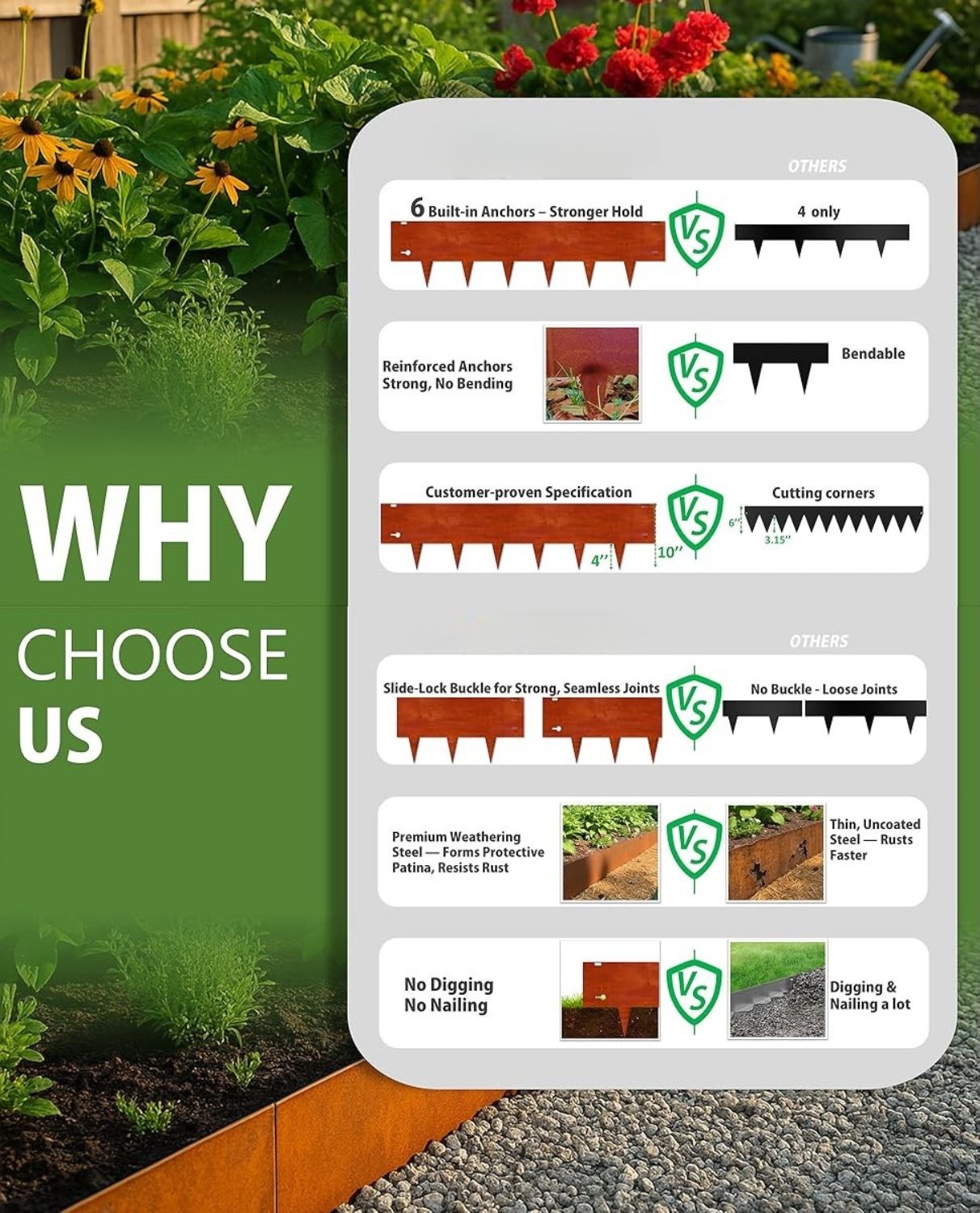
This comparison is perhaps the most important for buyers currently evaluating similar-looking products. Painted or powder-coated steel edging uses an ordinary steel substrate with a surface coating for corrosion protection. The fatal weakness of this approach is what happens when the coating is breached — by installation damage, UV degradation, or simple wear. Exposed bare steel under a compromised coating rusts aggressively, often leading to complete product failure within 3–7 years. Corten steel edging has no coating to fail. The alloy itself is the protection. A scratch or cut edge on corten will self-heal as the patina reforms over it. This is the critical functional distinction between genuine cor ten steel landscape edging and a lookalike product with a rusty-orange powder coat.
Buyer tip: When evaluating products, look for explicit mention of "weathering steel," "COR-TEN alloy," or ASTM A588/A242 specification. If a product simply describes itself as "rust-finish steel" or "pre-rusted," it may be standard steel with a surface treatment rather than genuine corten metal landscape edging.
Corten Edging vs Concrete Mowing Edges
Poured concrete mowing edges are extremely durable but effectively permanent. They're expensive to install, require professional labour, crack in freeze-thaw climates, and offer no design flexibility once in place. Corten garden edging can be installed by any competent homeowner in an afternoon, can be reconfigured if your landscape design evolves, and achieves a far more sophisticated visual result. For the overwhelming majority of residential applications, corten steel landscape edging is the superior choice in both practical and aesthetic terms.
How to Choose the Right Corten Steel Landscape Edging for Your Project
Not all corten steel edging products are created equal, and understanding the key variables helps you choose with confidence.
Steel Gauge and Height
Gauge
Gauge refers to the thickness of the steel. Heavier gauge (lower number) means more rigidity and longer service life. For residential landscape edging, a gauge that allows gentle hand-bending for curves while maintaining firmness under soil pressure is ideal. Too thin and the edging will flex and migrate; too thick and it becomes unnecessarily difficult to work with and install.
Height
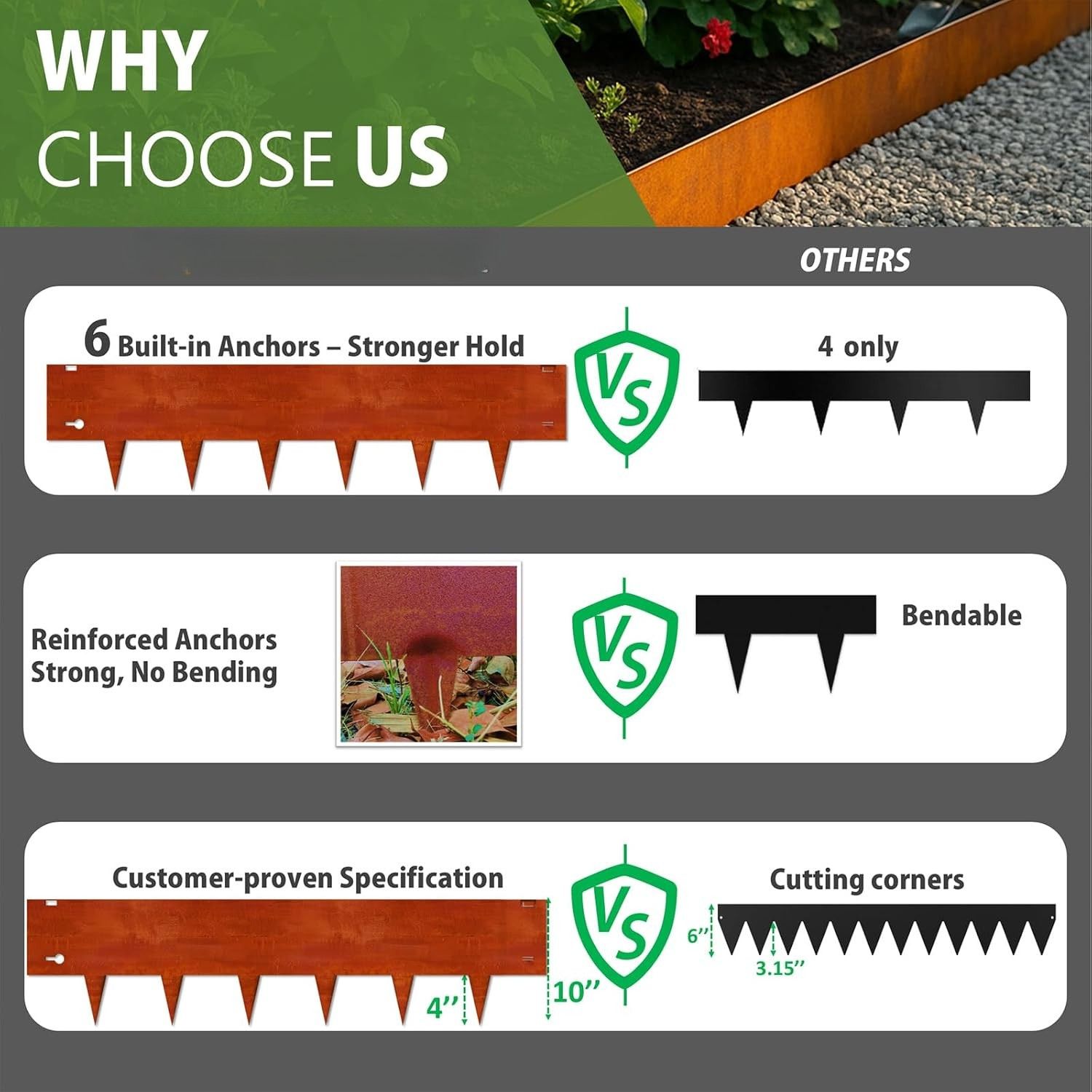
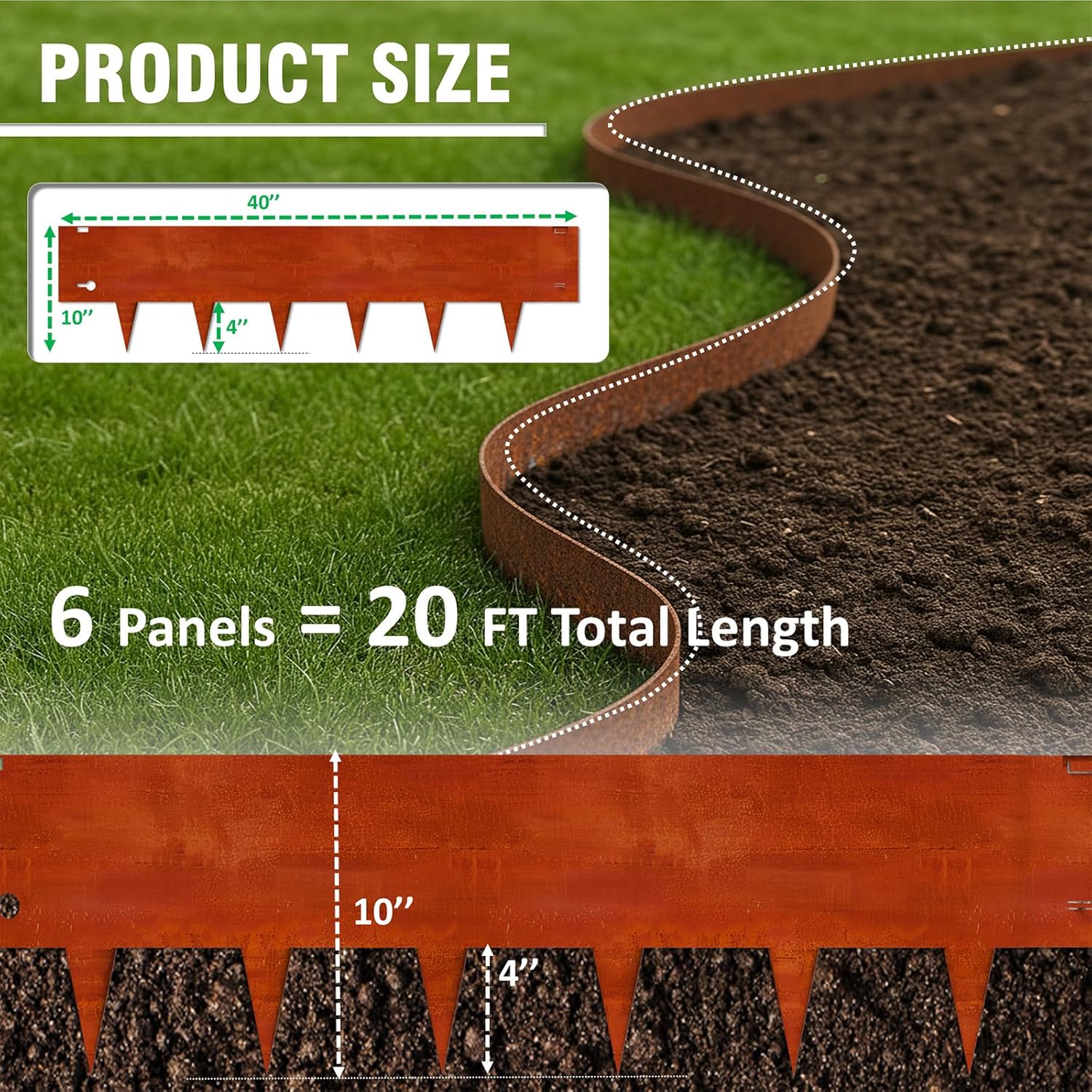
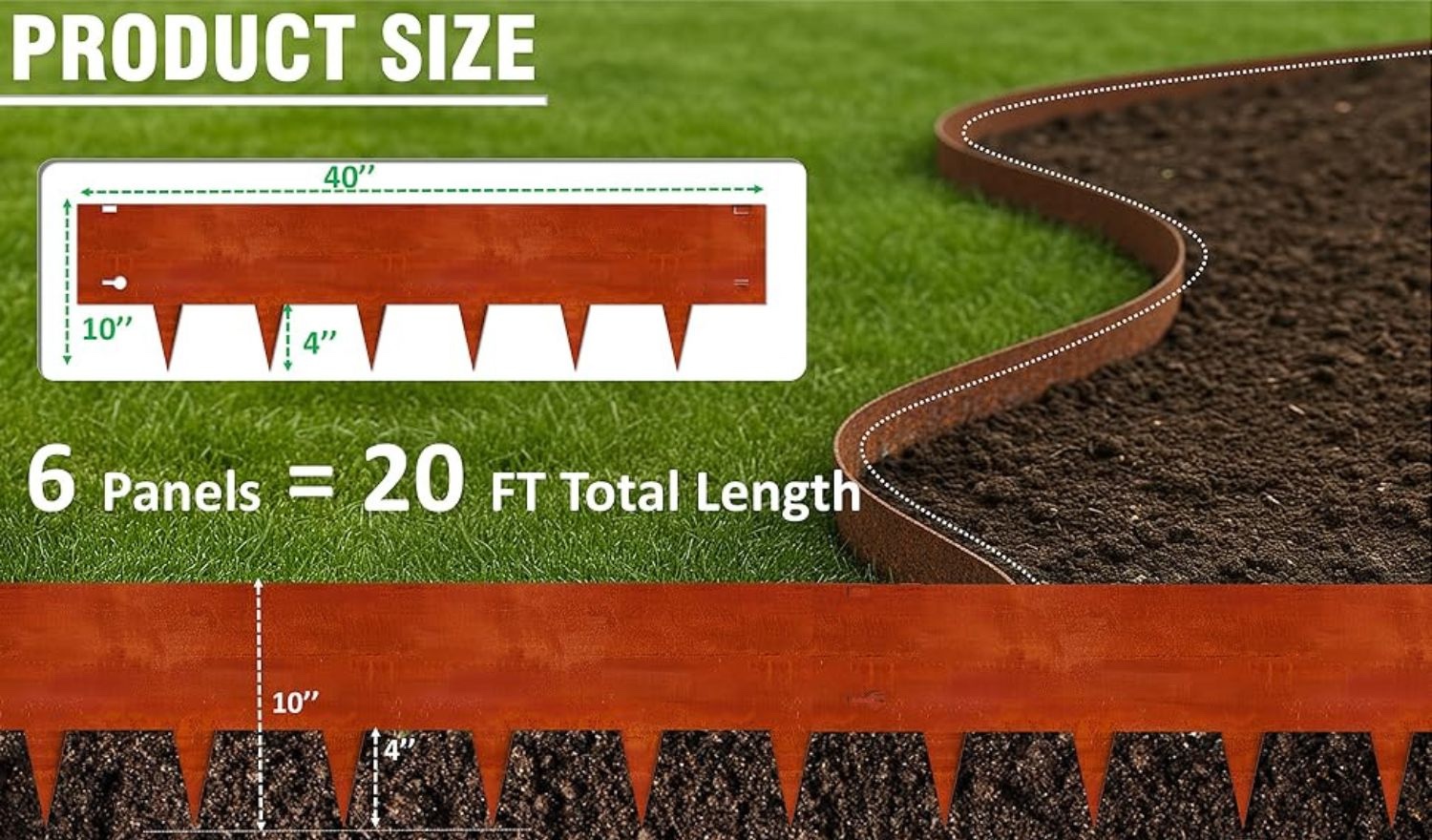
Edging height should be chosen relative to the depth differential between your lawn or path and the adjacent planting area. A 10-inch total height — with approximately 4 inches visible above grade and 6 inches anchoring below — works well for the vast majority of residential borders. This visible height is sufficient to contain mulch and define the edge cleanly without dominating the planting visually.
Strip Length and Coverage Planning
When planning how much corten steel landscape edging you need, always measure the full perimeter of your intended border and add a 10–15% buffer for corners, curves, and any necessary cuts. Edging that runs short mid-project creates delays and potential alignment issues. Most homeowners find it helpful to photograph and sketch their garden from above before ordering, mapping out each run of corten edge and calculating the linear footage required for each section.
For projects exceeding 100 linear feet, it's worth calculating coverage requirements by zone — front garden, side returns, back garden — and ordering by section rather than in one large quantity. This makes on-site logistics easier and reduces the risk of running short in any one area.
Integrated vs Separate Stake Systems
Corten steel edging systems either have stakes integrated directly into the strip body or require separate spike anchors to be driven alongside the edging. Integrated stake systems — where the bottom edge of the edging strip itself forms pointed anchor stakes — are generally preferable for ease of installation and for maintaining consistent spacing between anchor points. They're also visually cleaner, with no separate hardware visible at ground level.
What's Included
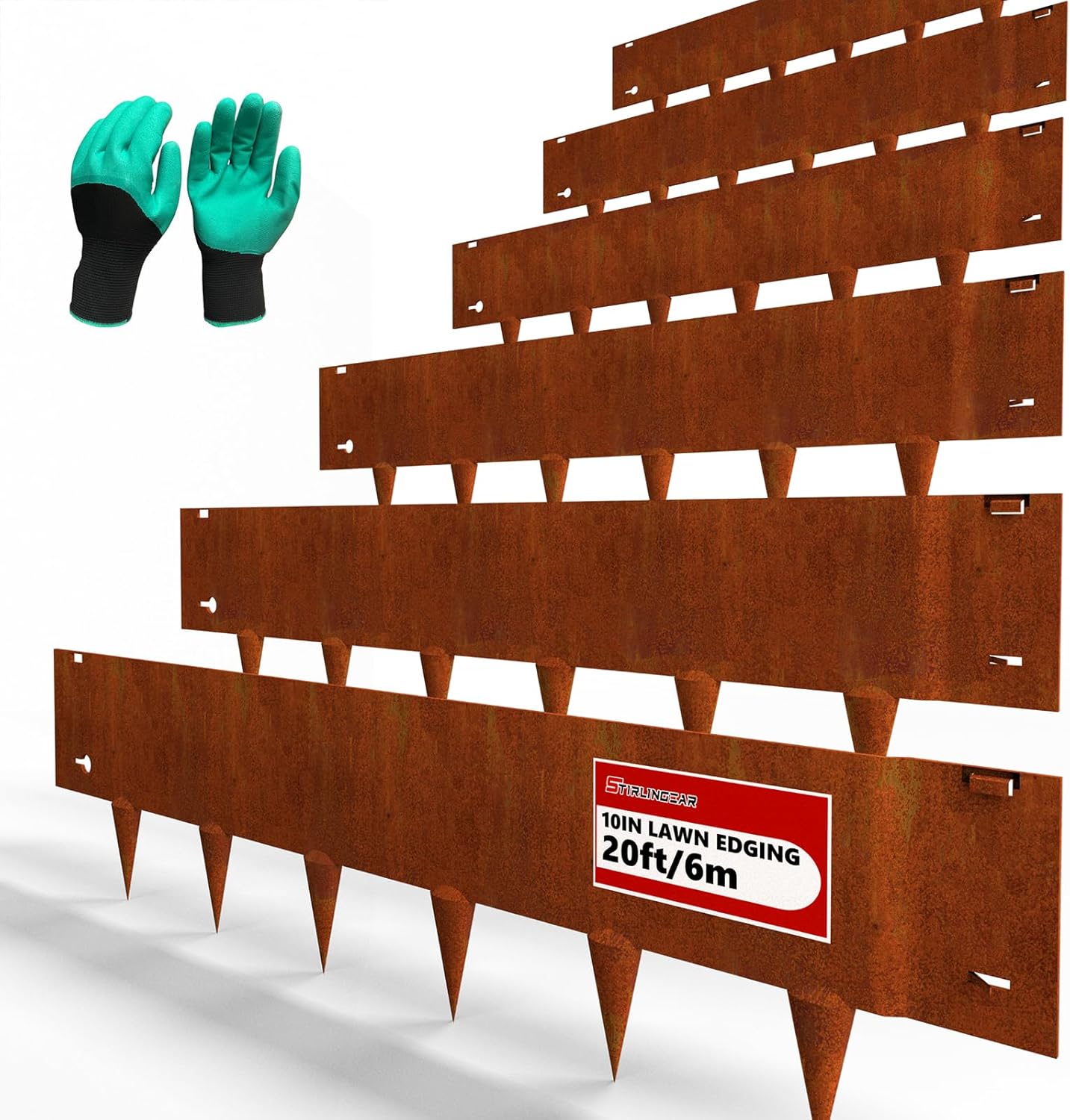
A quality corten steel edging product should include protective safety gloves. The edges of cut and stamped steel are sharp, and handling strips without hand protection is an unnecessary risk. If a product doesn't include gloves, factor the cost and inconvenience of sourcing them separately into your overall evaluation.
Step-by-Step: Installing Corten Steel Edging Like a Professional
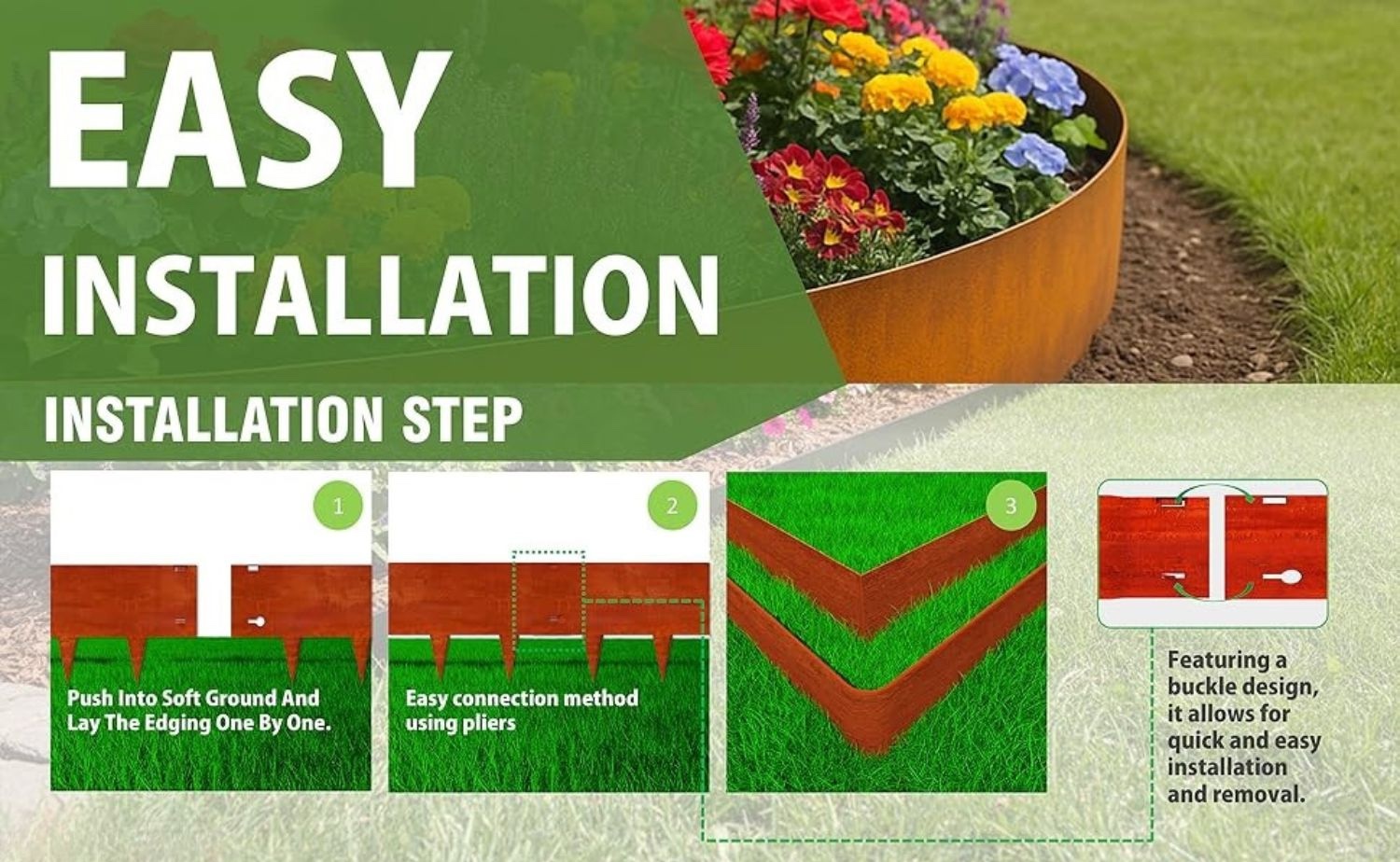
One of the most underappreciated advantages of corten steel for landscaping is how straightforward installation is when approached methodically. The following process applies to the majority of in-ground border applications.
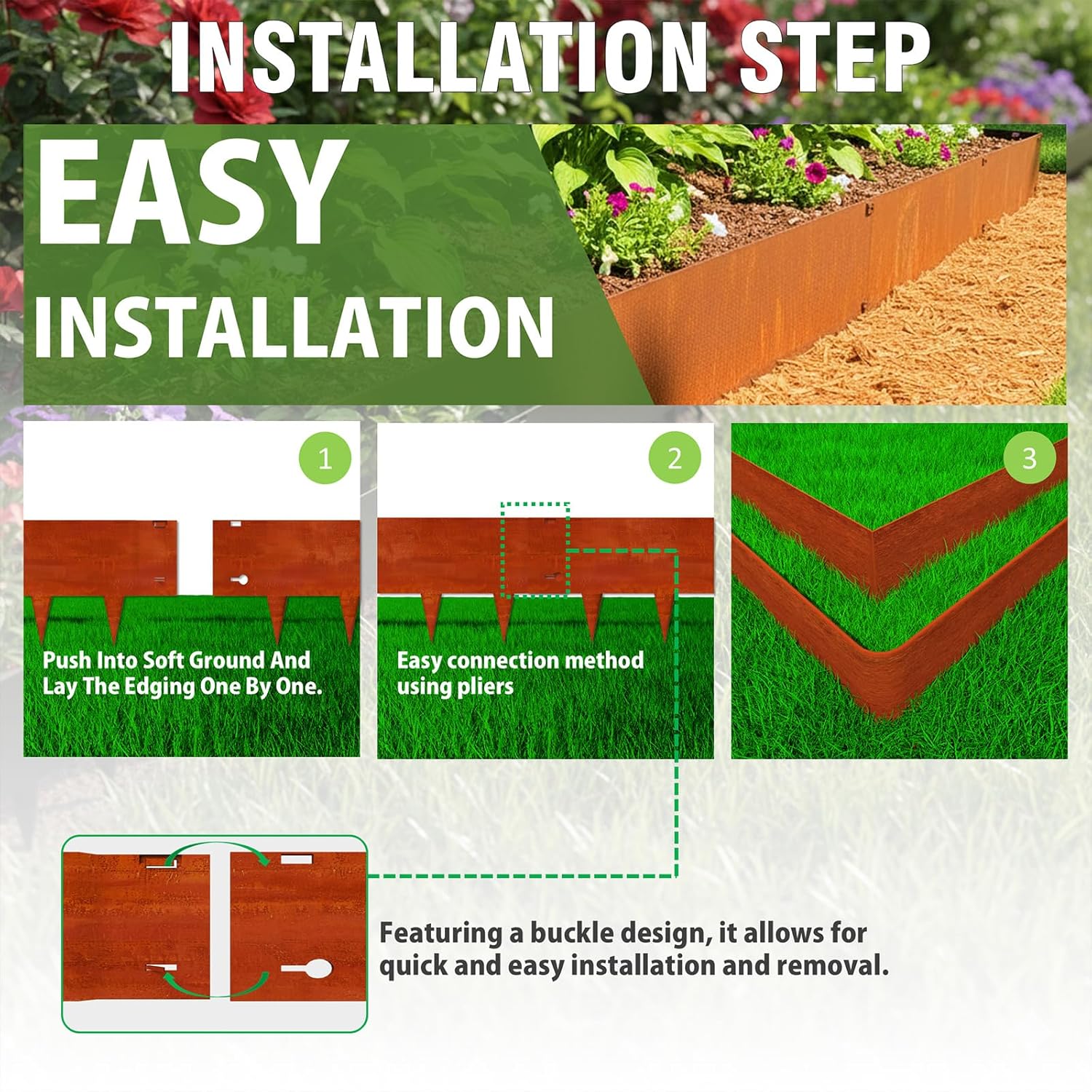
Step 1 — Plan and Mark Your Edge Line
Before touching a single strip, use garden stakes and a taut string line (for straight runs) or a garden hose laid along the ground (for curved borders) to define exactly where the edge of your corten steel landscape edging will sit. Spend time here — a well-planned line makes the rest of the installation significantly faster and produces a far cleaner result. Mark your line with chalk, sand, or a turf marking spray.
Step 2 — Prepare the Ground
While our corten metal landscape edging requires no digging, the ground along your marked line should be reasonably clear of large stones or compacted roots that would deflect the stakes as they're driven in. A quick pass with a hand trowel to clear the immediate installation zone is usually sufficient. In very hard or dry ground, watering the soil the day before installation can make driving significantly easier.
Step 3 — Position and Drive the First Strip
Put on your safety gloves. Position the first strip along your marked line. Place a scrap piece of 2x4 lumber flat along the top edge of the strip — this distributes mallet force evenly and protects the steel from distortion or marking. Drive the strip to the correct depth using firm, even mallet blows. Check vertical alignment visually as you go; the strip should sit plumb, not leaning inward or outward.
Step 4 — Connect Subsequent Strips
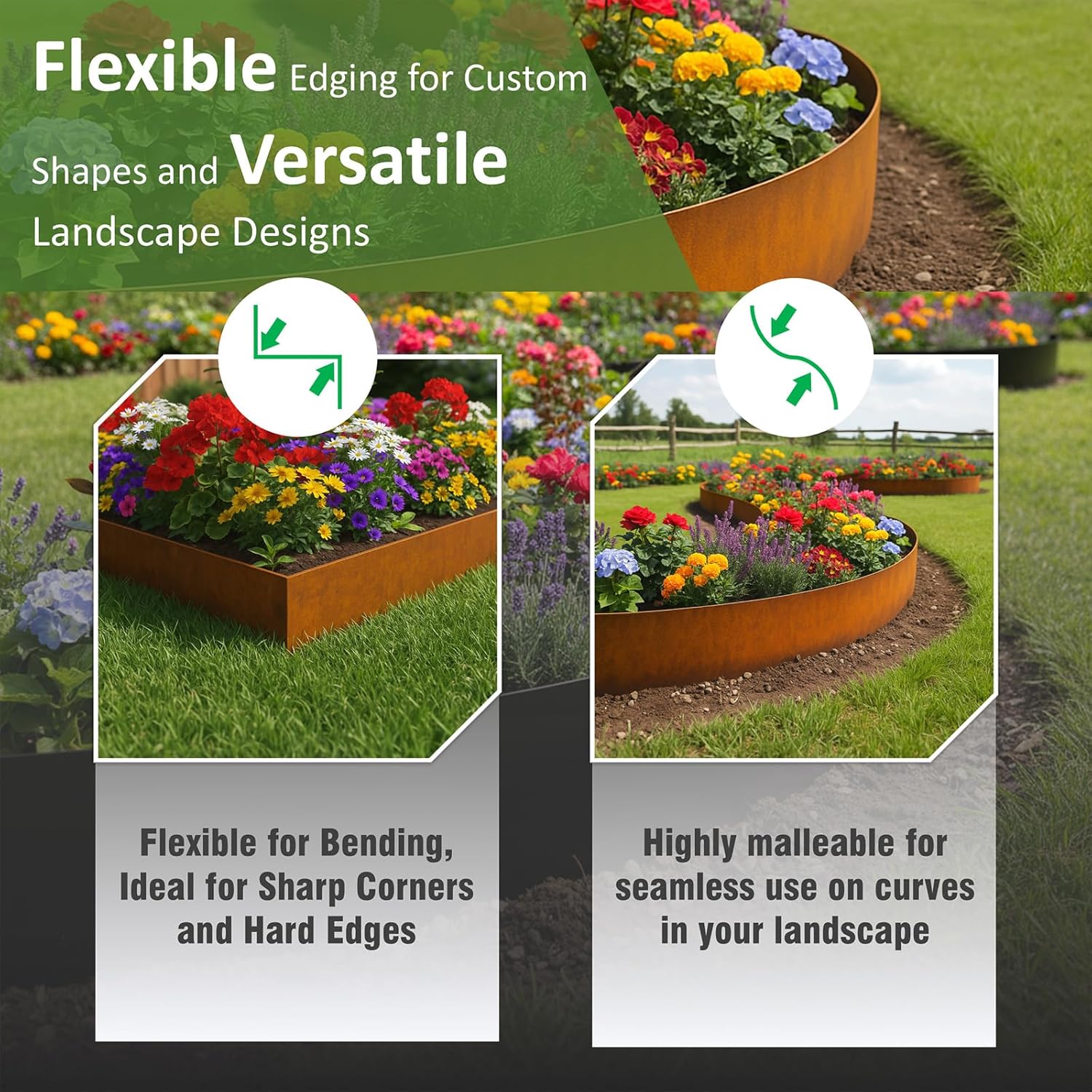
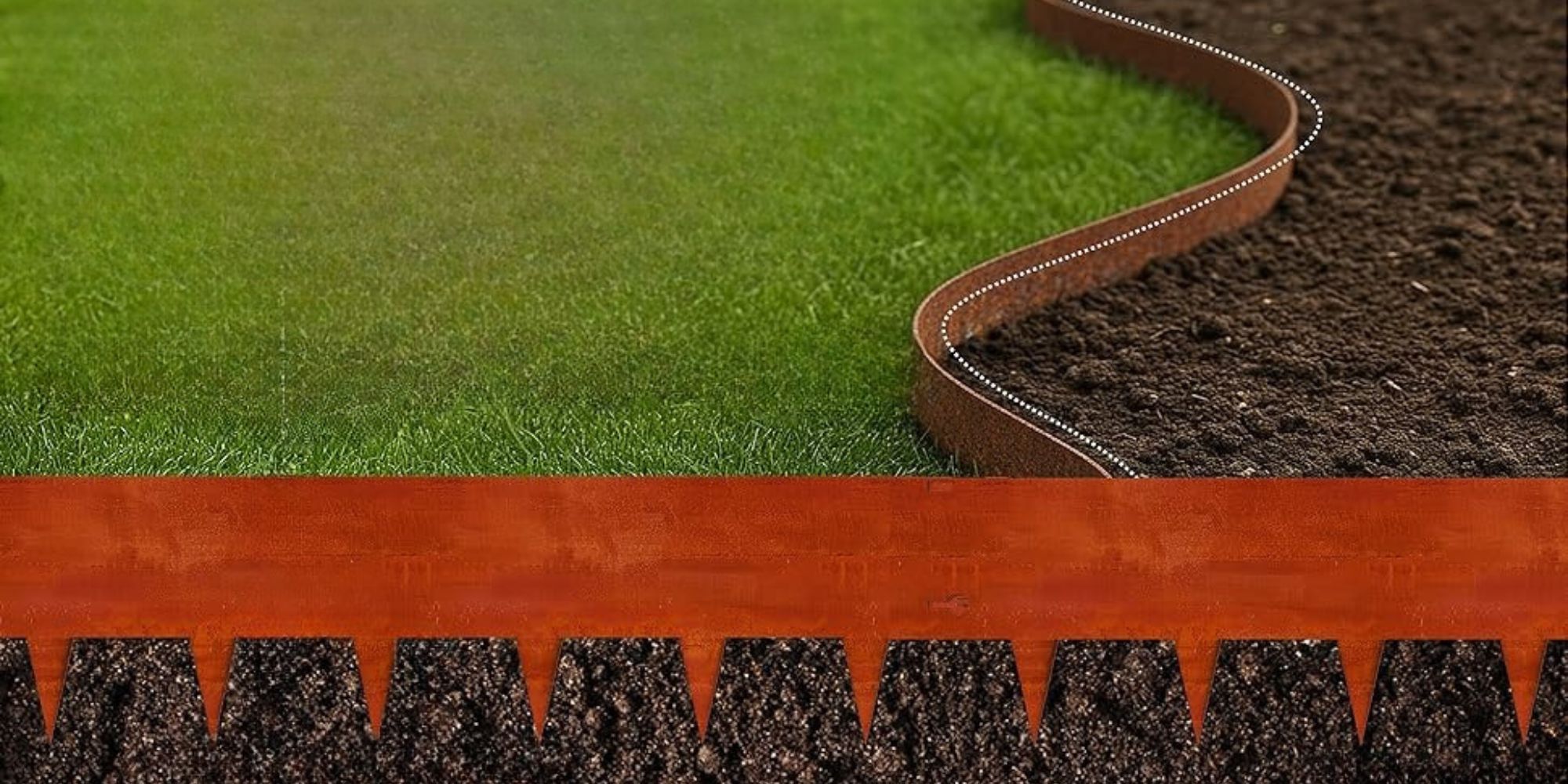
Slide the beginning stake of the next strip into the overlap position at the end of the installed strip. The stakes should interlock, maintaining a continuous run without visible gaps. Continue along your marked line, checking alignment regularly against your string or hose guide. For gentle curves, apply hand pressure to bow the strip before driving — the steel holds the curve once installed.
Step 5 — Dress the Installation
Once all strips are in, backfill any gaps along the outside face of the edging with soil and tamp lightly to firm the strips in place. On the planting side, dress the soil or mulch up to — but not over — the top of the visible edging height. The clean line between lawn and bed that good corten steel garden edging creates is one of the most visually satisfying improvements you can make to a landscape.
Corten Steel Landscaping: Design Applications and Inspiration
Understanding how and where weathering steel garden edging performs best helps you plan a project that delivers maximum visual impact.
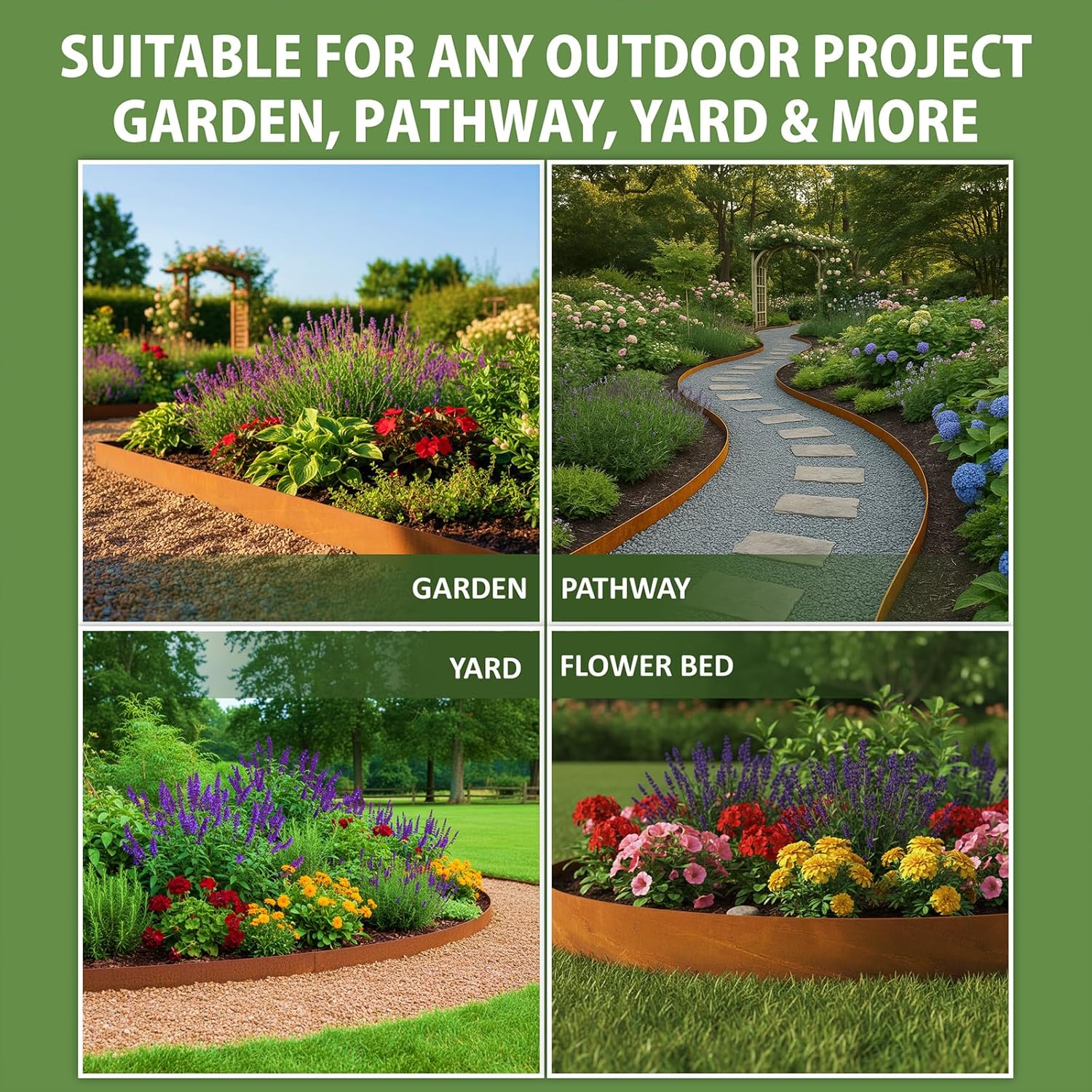
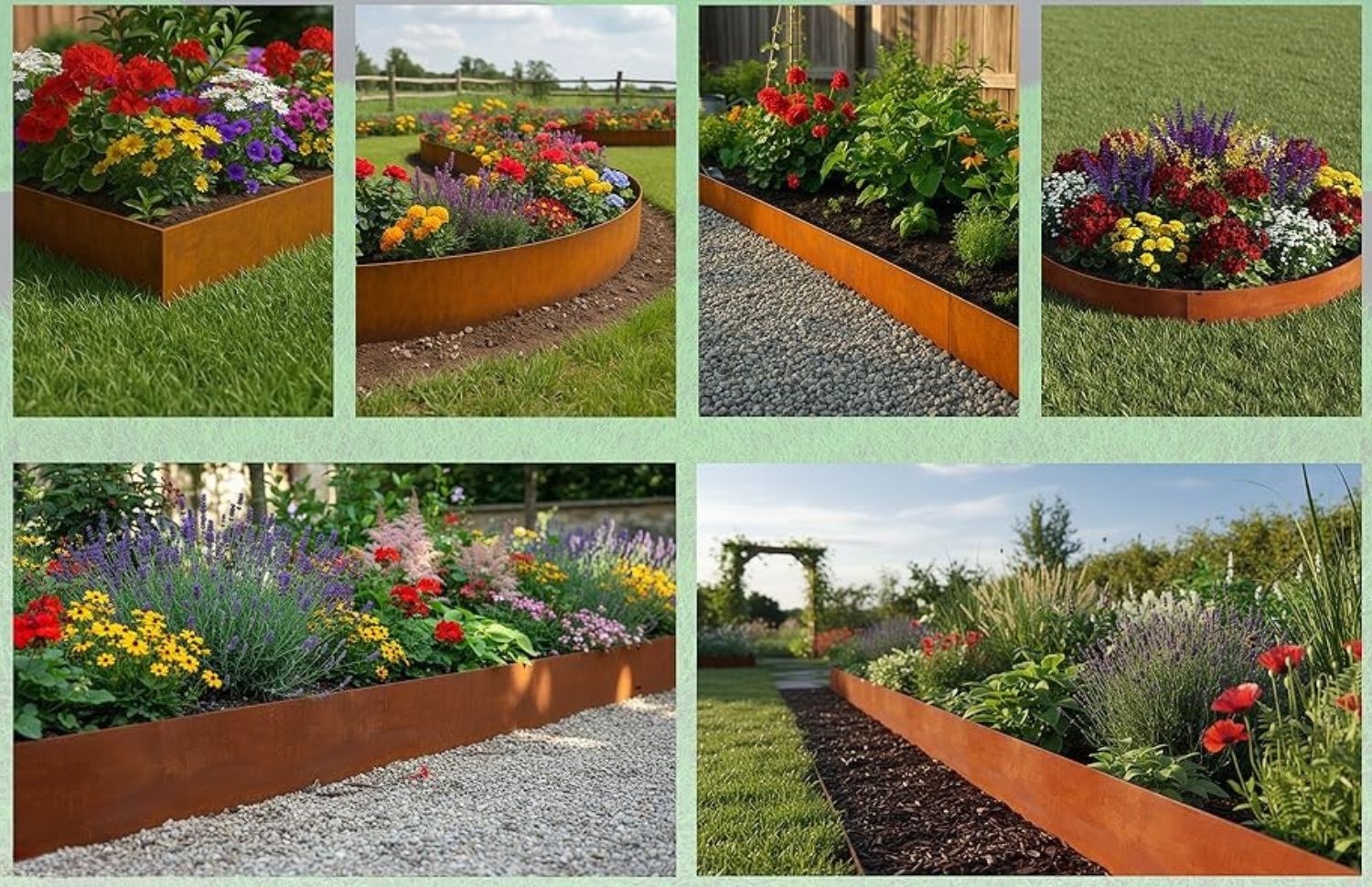
Lawn Borders and Mowing Edges
The classic application for corten landscape edging is defining the border between lawn and planting beds. A clean, rigid corten edge eliminates the need for manual edging with a half-moon tool each season, and the slight height differential it creates naturally prevents grass from creeping into beds. Over time, this single improvement does more for the perceived quality of a maintained garden than almost any other intervention.
Pathway and Driveway Edging
Corten steel edging alongside gravel paths or driveway edges provides structural containment for loose materials while creating a sophisticated visual frame. The contrast between the warm rust of the corten and the cool grey of granite gravel or the neutral tones of decomposed granite is particularly striking. This is the look increasingly specified in contemporary garden design.
Raised Bed Borders and Vegetable Gardens
As a base-level border around raised bed structures, corten garden edging provides a clean finishing detail that elevates the overall aesthetic of the kitchen garden. The edging defines the transition between the bed and surrounding lawn or path, prevents mulch migration, and adds a layer of visual cohesion to a productive garden space.
Decorative Zoning
Corten steel for landscaping is increasingly used to create clear zones within larger garden spaces — separating ornamental from productive areas, defining seating zones, or creating visual structure in open naturalistic planting schemes. The clean line of corten edge provides orientation and order in gardens where soft planting could otherwise feel undefined.
Long-Term Care, Maintenance, and What to Expect Over Time
One of the most compelling reasons to choose weathering steel edging is the virtual absence of ongoing maintenance requirements. However, understanding what the material does over time helps you manage expectations and make the most of your investment.
The Patina Development Timeline
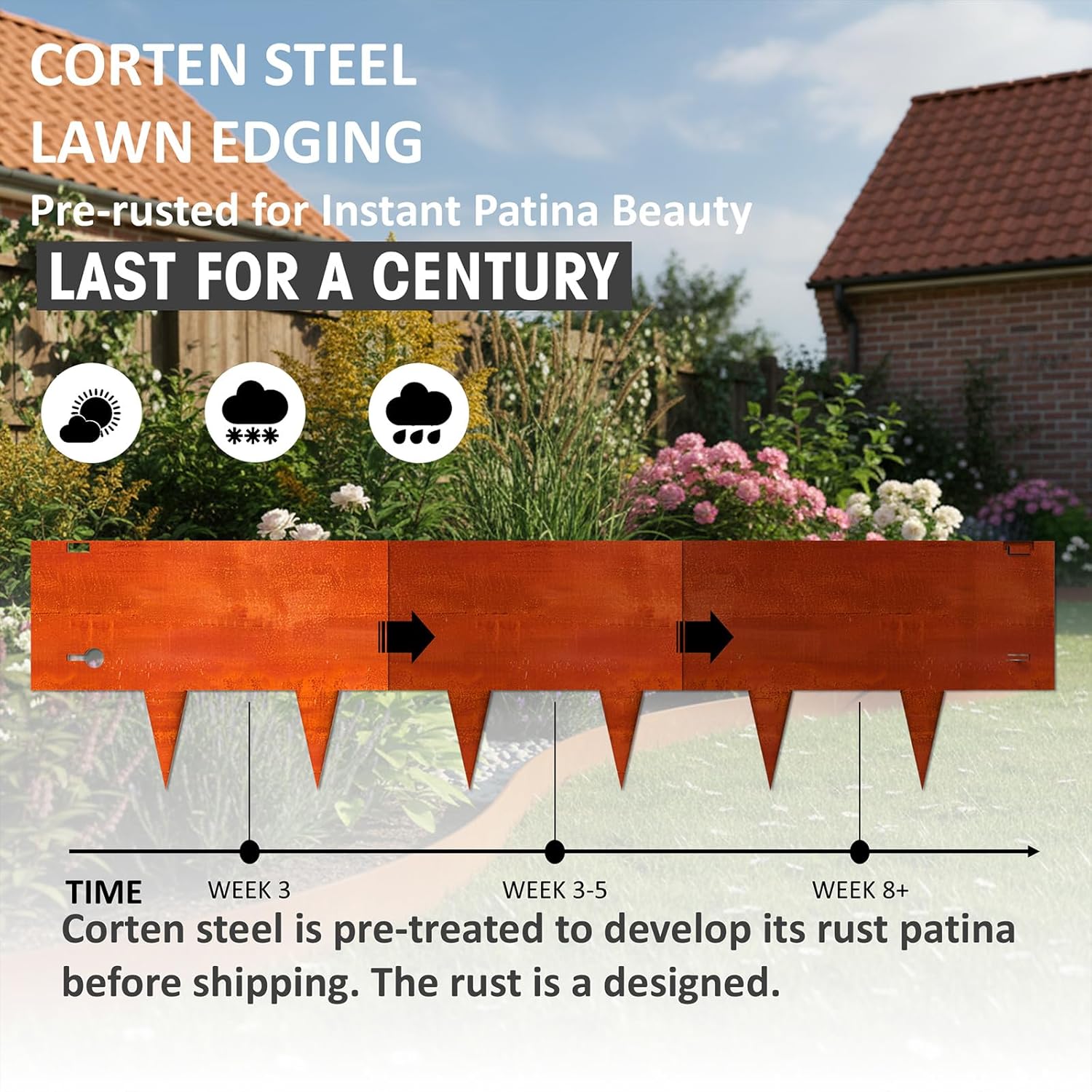
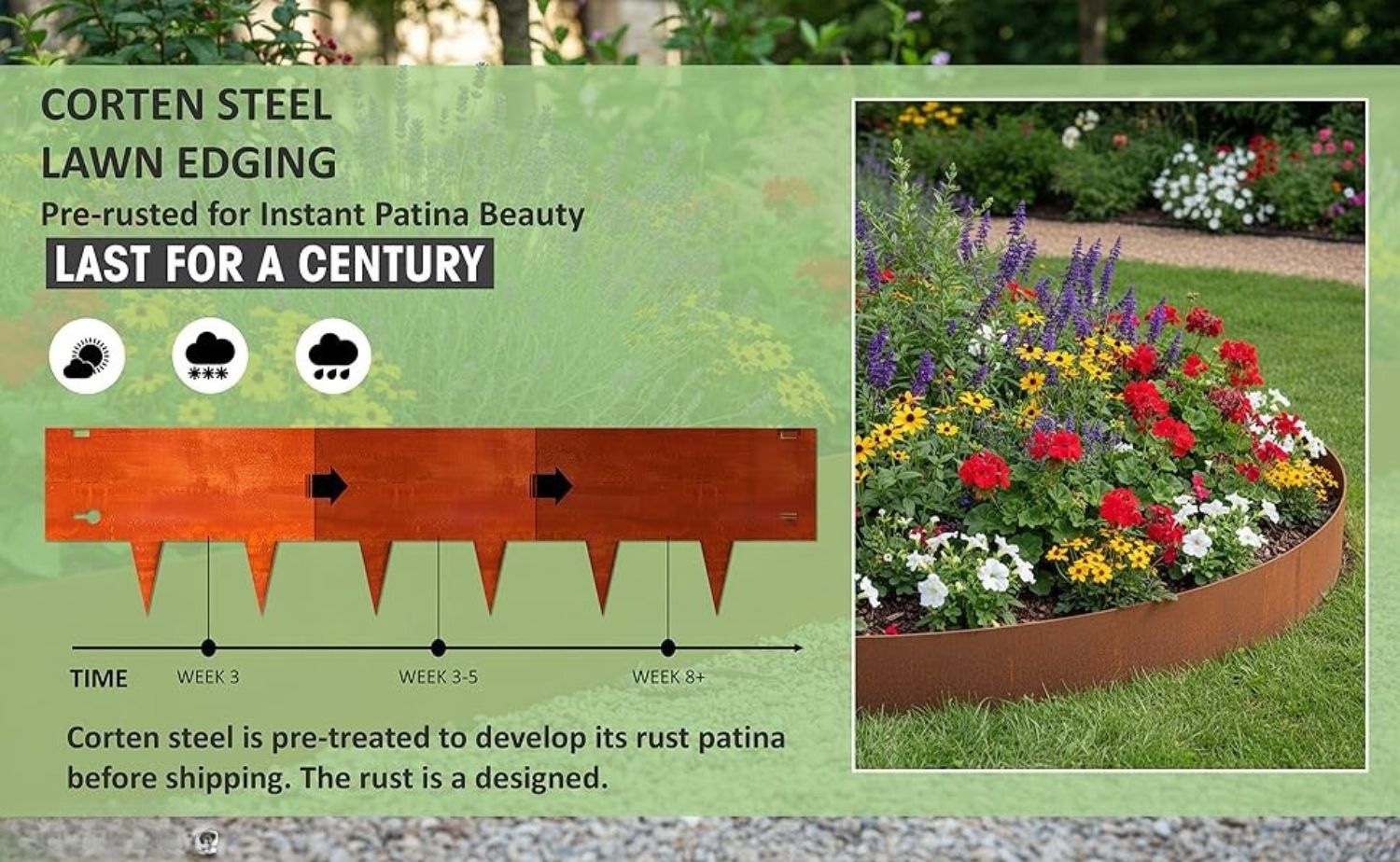
Fresh corten steel landscape edging begins oxidising within the first week of exposure. In humid or frequently wet climates, visible colour change is apparent within 2–3 weeks. In dry climates, the process may take a few months to become visually pronounced. The active patina phase — during which the steel is brightest orange-rust — typically lasts 6–18 months, after which the surface gradually darkens and stabilises to a rich, dark brown. Once stable, the colour changes very little from year to year.
Managing Initial Runoff
During the active patina phase, rain washing over the steel can carry orange-tinted water onto adjacent surfaces. This is temporary and diminishes significantly once the patina stabilises. Managing it during the initial period is straightforward: a simple rinse of any adjacent paving after heavy rain is sufficient. Installing a 2–3 inch buffer of gravel or bark mulch between the corten and any concrete or stone surfaces can further reduce visible staining during the curing period.
What Corten Steel Edging Never Needs
For the record: corten steel edging never needs painting, sealing, oiling, galvanising, retreating, or any other surface maintenance. Cut edges weather and self-heal. Scratches and abrasions repair themselves. This is a material that rewards being left alone to do what it does naturally.
The real cost comparison: A typical plastic edging installation needs replacement every 3–5 years. Aluminium edging may last 10–15 years but eventually migrates and loses its line. A single installation of quality cor ten steel landscape edging, at $129 for 20 feet, is likely to outlast any other edging material you could specify. Calculated per year of service life, corten steel edging is the most cost-effective choice available.
Is Corten Steel Edging Right for Your Garden? A Final Summary
Corten steel edging is the right choice for gardeners and homeowners who want a landscape border that performs without compromise, improves with age, and requires nothing beyond the initial installation. It's the material used by professional landscape architects for a reason: it delivers results that no other edging material can match across the full combination of durability, aesthetics, and long-term value.
If you're creating defined borders in a lawn, framing a flower bed, edging a gravel path, bordering a driveway, or simply elevating the visual quality of your outdoor space — corten steel landscape edging gives you the cleanest, most permanent solution available. At $129 for a 20-foot 6-pack, complete with safety gloves and integrated anchor stakes that require no digging, there is no more compelling value in the category.
For landscaping projects that deserve to look this good in twenty years as they do on day one — the choice is corten.