The Complete Resource
The Complete Buyer's Guide to Landscape Edging
If you're serious about upgrading your garden edges and borders, this guide covers everything — from understanding the material options to planning your project, installing correctly, and choosing the right lawn edging or garden edging for your specific landscape. Whether you're defining flower bed borders, framing a driveway, or creating clean garden edges across a full property, the right information makes all the difference.
Why Landscape Edging Is One of the Highest-Impact Garden Improvements You Can Make
Garden edging does something no amount of planting, pruning, or mulching can replicate on its own: it creates a defined, legible structure that makes the whole garden read as intentional. A lawn with clean, crisp edging borders looks maintained and designed. The same lawn without defined garden edges and borders looks untidy regardless of how well-planted the beds are. Landscape edging is the framework on which everything else hangs.
Beyond aesthetics, the practical case for quality garden borders and edging is equally compelling. A properly installed metal landscape border prevents lawn grass from colonising planting beds — the number one source of recurring garden maintenance. It contains mulch, bark chip, and decorative gravel within flower bed borders, preventing the gradual migration that turns a tidy bed into a mess within weeks. It guides the mower wheel along a straight or curved line, eliminating the need for manual string-trimming around bed edges. And it provides physical structure that retains the shape of beds and paths over years and decades of soil movement and plant growth.
The choice of material — and the quality of that material — determines whether all of these benefits persist for one season or twenty years.
The Problem with Most Edging Borders for Gardens
The landscape edging market is dominated by products that perform adequately at the point of purchase and fail progressively afterward. Plastic edging cracks in UV exposure, becomes brittle in frost, and rises out of the ground during freeze-thaw cycling. Rubber edging sags and loses its line under sustained soil pressure. Thin painted steel edging relies entirely on its surface coating for corrosion resistance — and once that coating is breached by installation damage, soil abrasion, or UV degradation, the base steel rusts through rapidly.
The result is a category that most homeowners experience as a repetitive expense: buy, install, watch it fail, replace. Quality metal landscape edging — specifically corten (weathering steel) and grade 304 stainless steel — breaks this cycle entirely. Both materials have corrosion resistance built into the alloy itself, not applied as a surface treatment. Both are installed once and require no ongoing maintenance. Both improve or maintain their appearance over time rather than degrading. They represent a fundamentally different category of garden border edging — one that actually delivers on the promise of permanence.
Understanding Your Metal Landscape Edging Options
At American Edging, we carry two premium steel landscape edging products — corten steel and stainless steel — because they serve different aesthetic purposes while delivering the same standard of quality and durability. Here's how to understand each one and choose confidently.
Corten Steel Landscape Edging
What It Is
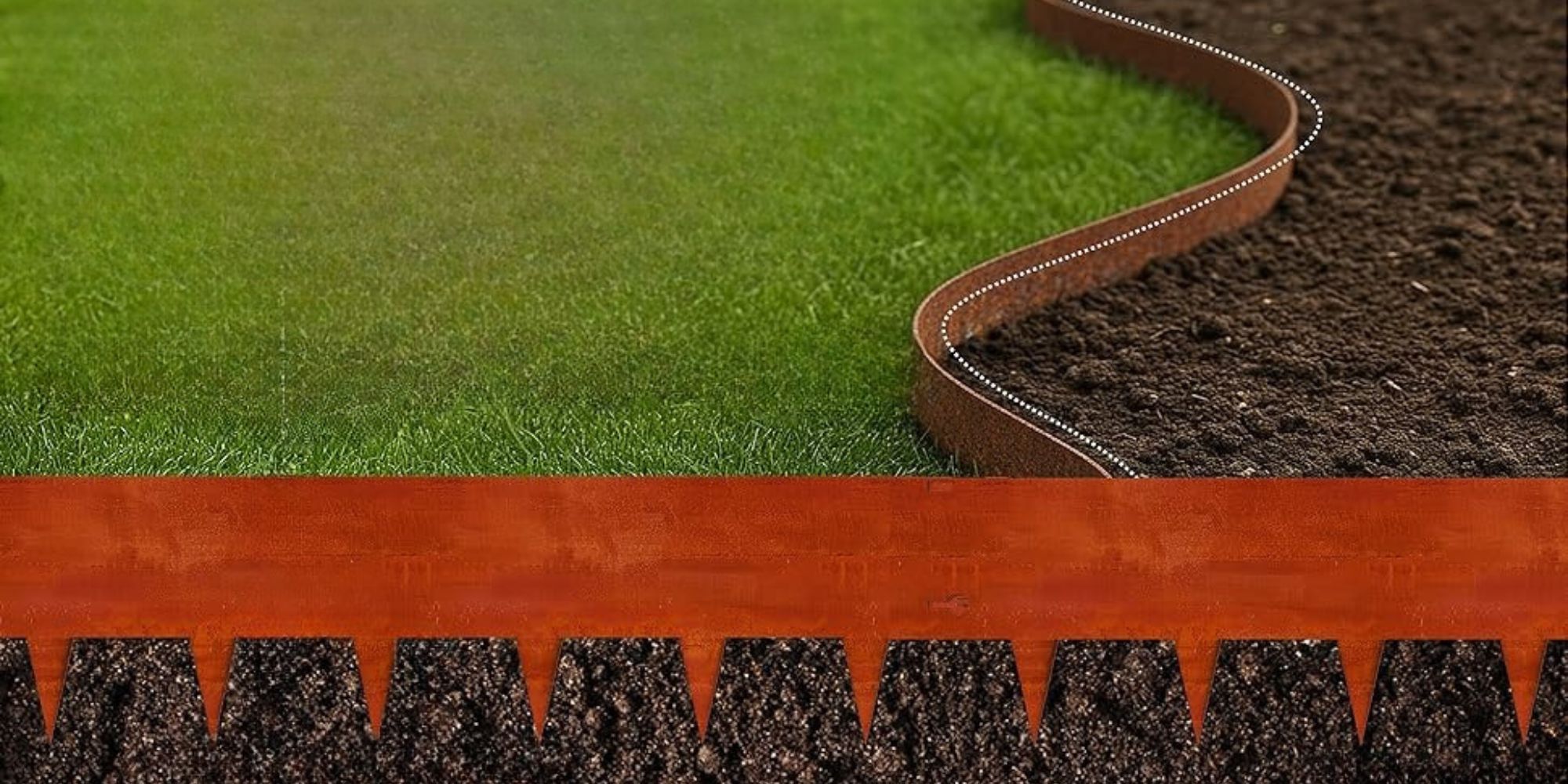
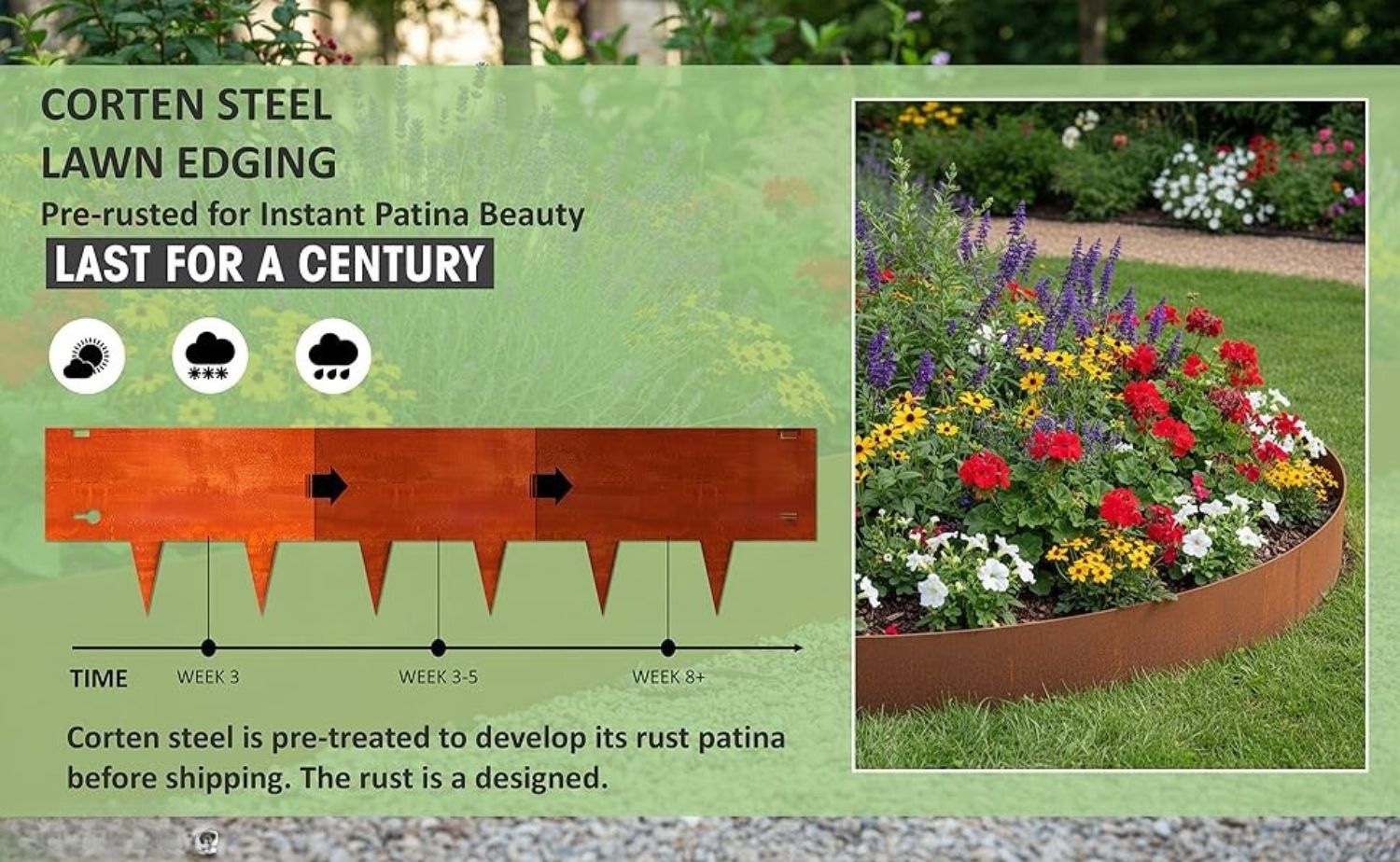
Corten — officially known as weathering steel or COR-TEN — is a low-alloy steel that contains copper, chromium, nickel, and phosphorus in a specific ratio that fundamentally changes how it oxidises. Rather than rusting through progressively (as ordinary steel does), corten forms a tightly bonded, chemically stable patina that acts as a self-renewing barrier against further corrosion. This patina — the warm rust tones that develop from amber orange to rich sienna over the first 6–18 months — is not a sign of deterioration. It is the material performing exactly as engineered.
Who It's For
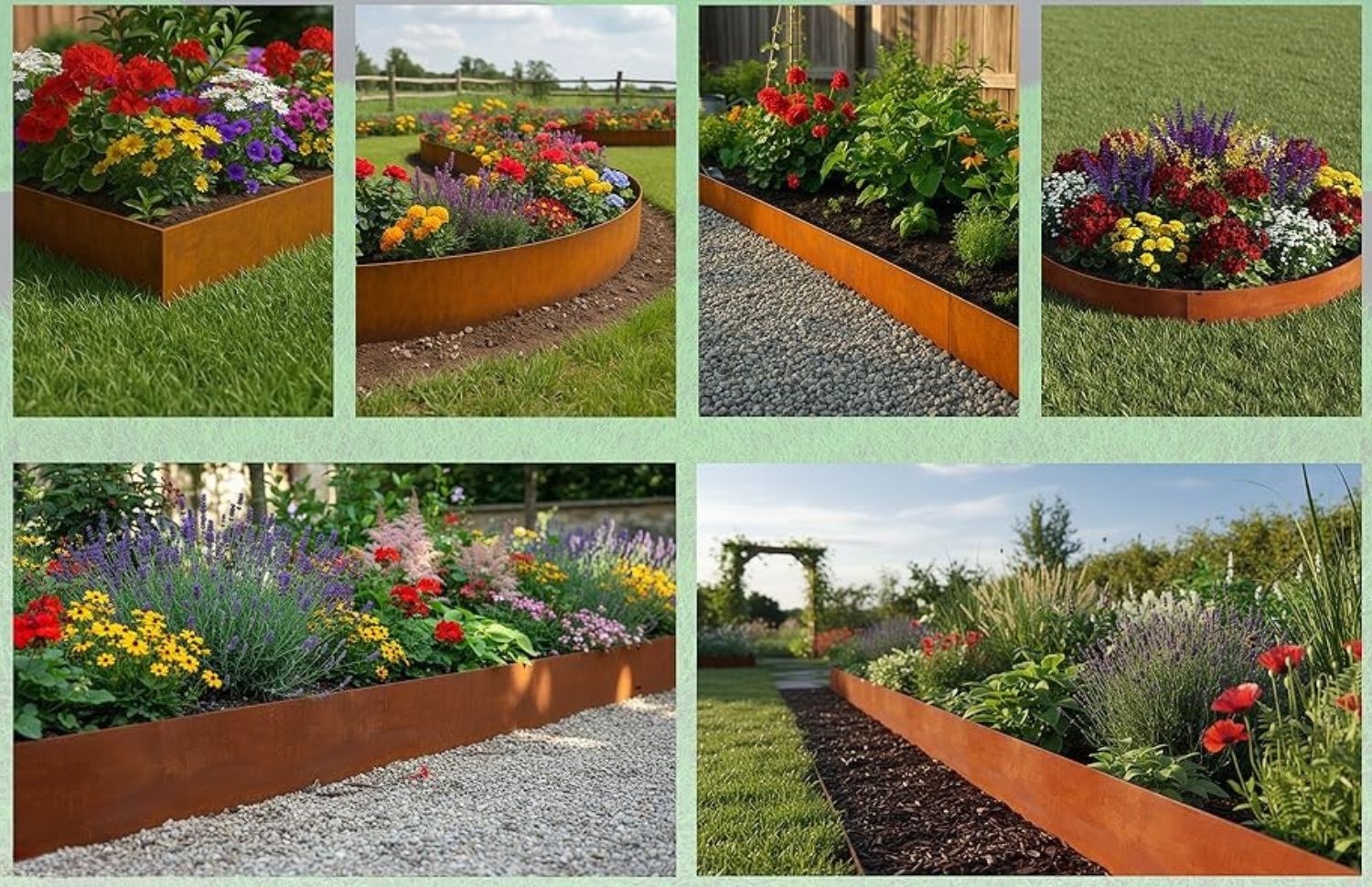
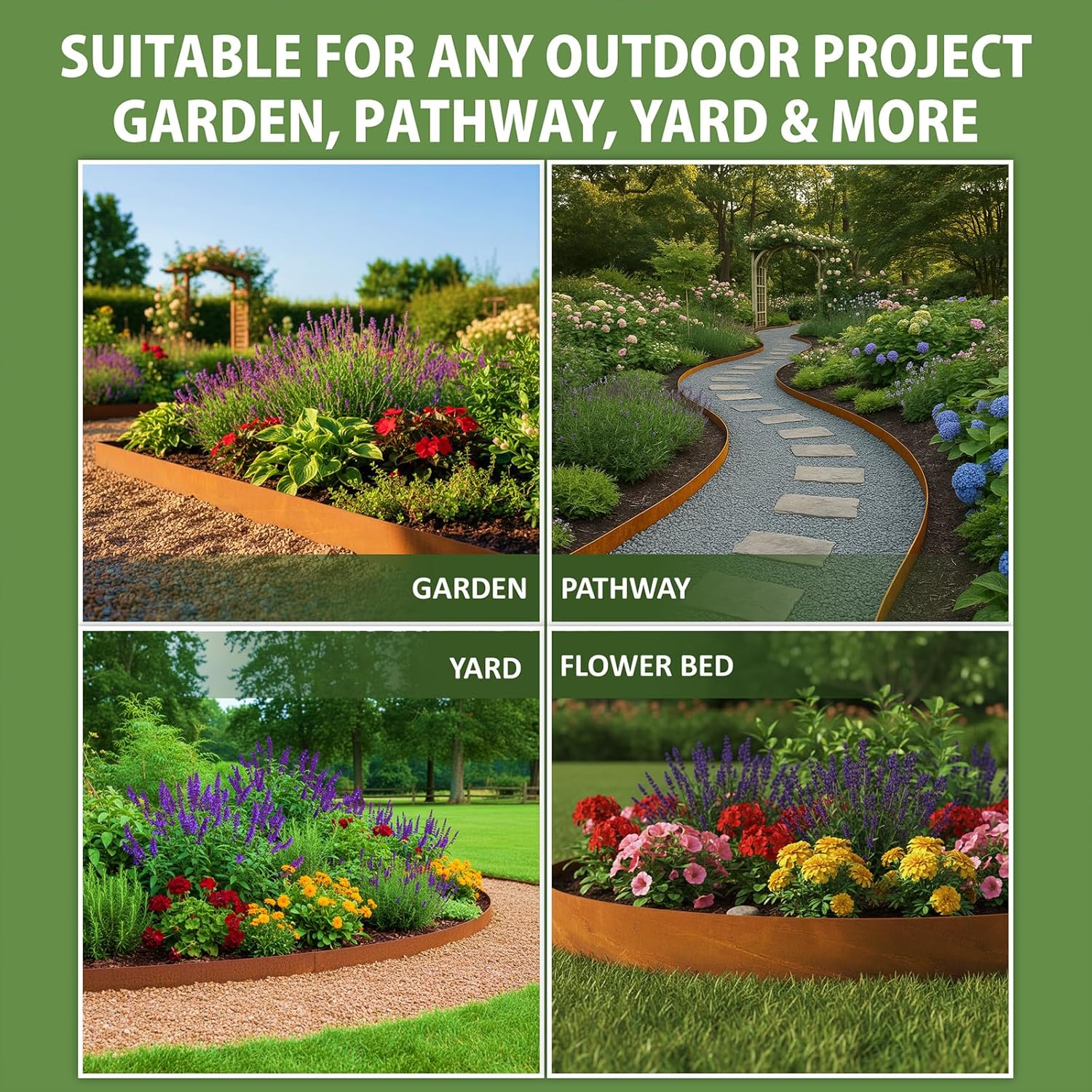
Corten steel landscape edging suits gardens where the material's warmth and character are an aesthetic asset — naturalistic planting schemes, prairie and meadow gardens, cottage borders, kitchen gardens, and any space where the organic palette of rust, soil, and foliage create a cohesive visual environment. It's also the material of choice in contemporary and architectural landscapes where the patina provides a rich counterpoint to clean stone or concrete hardscaping.
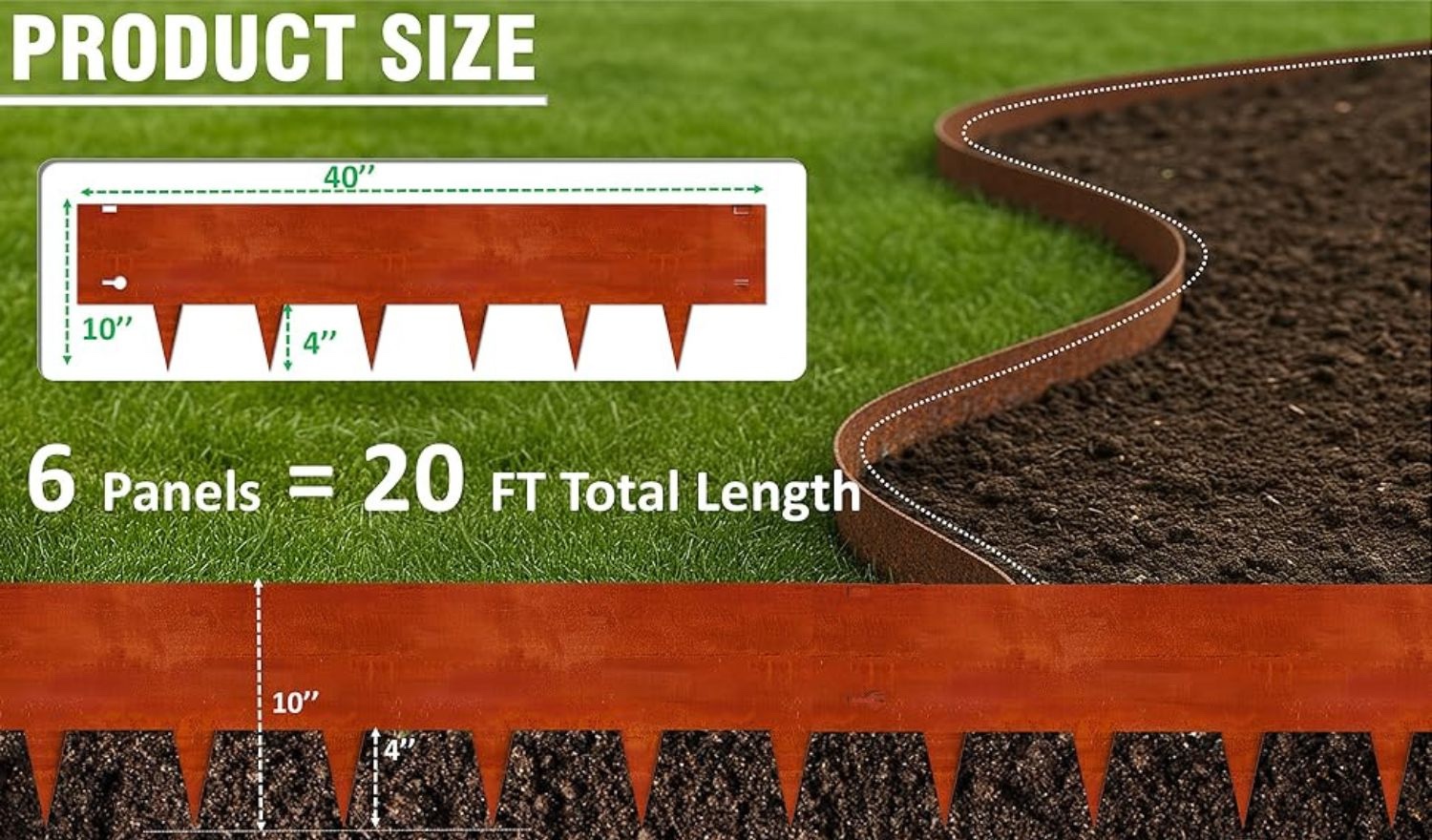
Our corten pack covers 20 feet with six 40-inch strips, hammer-in design, and included safety gloves. No digging required. At $129 for the pack (reduced from $149), it represents exceptional value for a material that professional landscapers specify for high-end projects.
Stainless Steel Garden Edging
What It Is
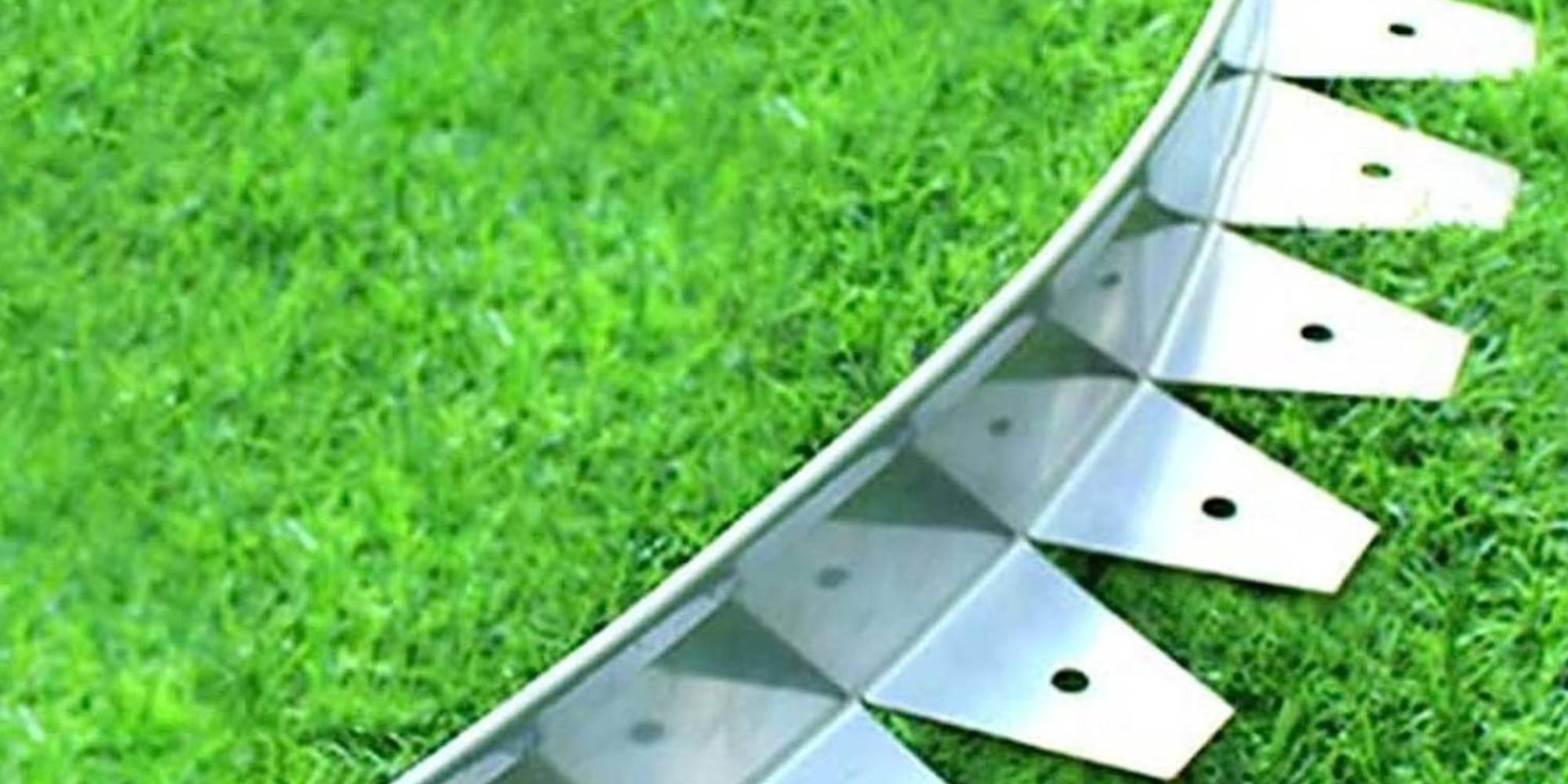
Grade 304 stainless steel garden edging has corrosion resistance built into its alloy through a chromium oxide passive layer that forms on the surface and regenerates continuously when exposed to oxygen. There is no coating to breach, no paint to peel, no galvanising to fail. The bright silver finish transitions gracefully to a softer satin sheen over time — an evolution that most gardeners find more visually sympathetic than the initial mirror-bright surface.
Who It's For
Stainless steel lawn edging suits contemporary, minimalist, and formal garden designs where precision and a clean neutral finish are the priority. The silver tones complement pale gravel, dark mulch, and structured planting schemes equally well. It's also the preferred choice for edging around edible gardens, as grade 304 is food-safe and chemically inert in soil.
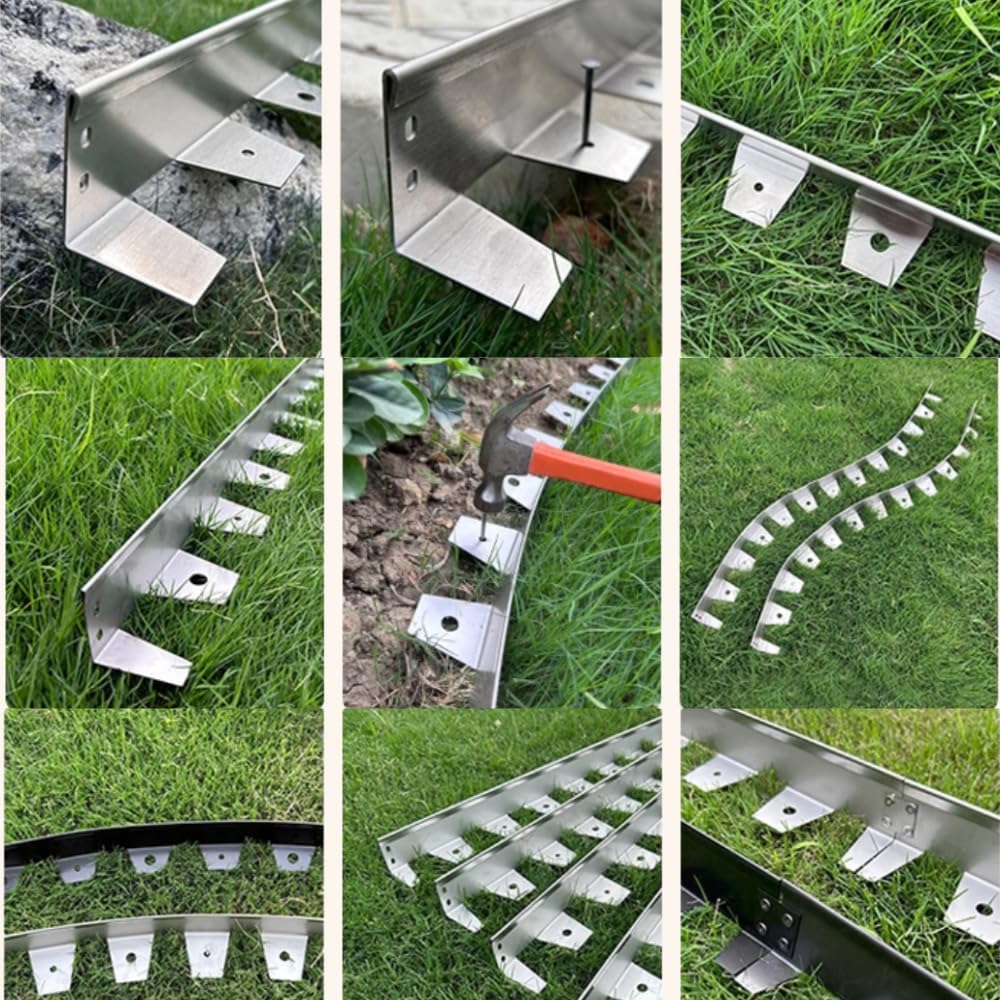
Our stainless pack covers 33 feet with ten 3.3-foot strips, pre-drilled no-dig stake holes, included fixing stakes, connector sheets, screws and nuts — a complete kit at $99 (reduced from $149).
Not sure which to choose? Use the comparison table on this page to see both products side by side. The short answer: if your garden has warm, naturalistic tones — choose corten. If it's clean, contemporary, and structured — choose stainless. If it's both, many of our customers use one for planting beds and the other for pathway and lawn edging.
How to Plan Your Garden Edging Project
Good planning before installation makes the difference between a garden that looks professionally designed and one that looks like an improvement project in progress. The following steps apply whether you're edging a single flower bed border or defining the full perimeter of a large property.
Step 1 — Map Your Garden Edges and Borders
Walk your garden and identify every boundary you want to define: the edges between lawn and planting beds, the sides of gravel or bark pathways, the perimeter of tree rings, the line along a driveway or patio edge. Sketch these zones — even a rough plan on paper helps you calculate coverage requirements accurately and think through sequencing. Mark any areas where curved edging will be needed versus straight runs.
Step 2 — Measure and Calculate Coverage
Measure the linear footage of each run. For curved garden edges and borders, lay a measuring tape along the actual curve rather than measuring the chord — curves require more material than a straight-line measurement suggests. Add all runs together, then add 15% to the total for cutting waste, corners, and any measurement errors. This buffer is important: running short of metal landscape edging mid-installation creates delays and can result in mismatched material from different batches if you need to reorder.
Step 3 — Choose Your Material by Zone
You don't have to use the same landscape border material throughout. Many experienced gardeners use corten for planting bed borders and naturalistic zones, and stainless for pathway edging and formal lawn edging — the different materials create distinct visual zones within the garden while both delivering the same quality of edge. Plan which material fits which zone before ordering.
Step 4 — Gather Your Tools
Both products install without specialist tools. You'll need: a heavy rubber or steel mallet, a tape measure, garden stakes and string line (for straight runs), a garden hose (for marking curved edging), and safety gloves — included in every American Edging pack. If you plan to cut any strips to length, add a metal saw or angle grinder to the list.
Installation: Creating Perfect Garden Borders and Edging
Both our corten and stainless steel landscape edging products install without digging, but taking a methodical approach produces significantly better results than rushing. Here's the process that consistently delivers professional-quality garden edges and borders.
Marking Straight Lawn Edging Runs
For straight lawn edging — along a driveway edge, beside a path, or creating a formal border between lawn and bed — set two stakes at either end of the run and stretch a taut string line between them. This gives you a precise alignment guide that you can check each strip against as you install. Steel landscape edging holds its position exactly where you install it, so the effort spent getting the line right beforehand pays off immediately in the finished result.
Creating Curved Garden Edging
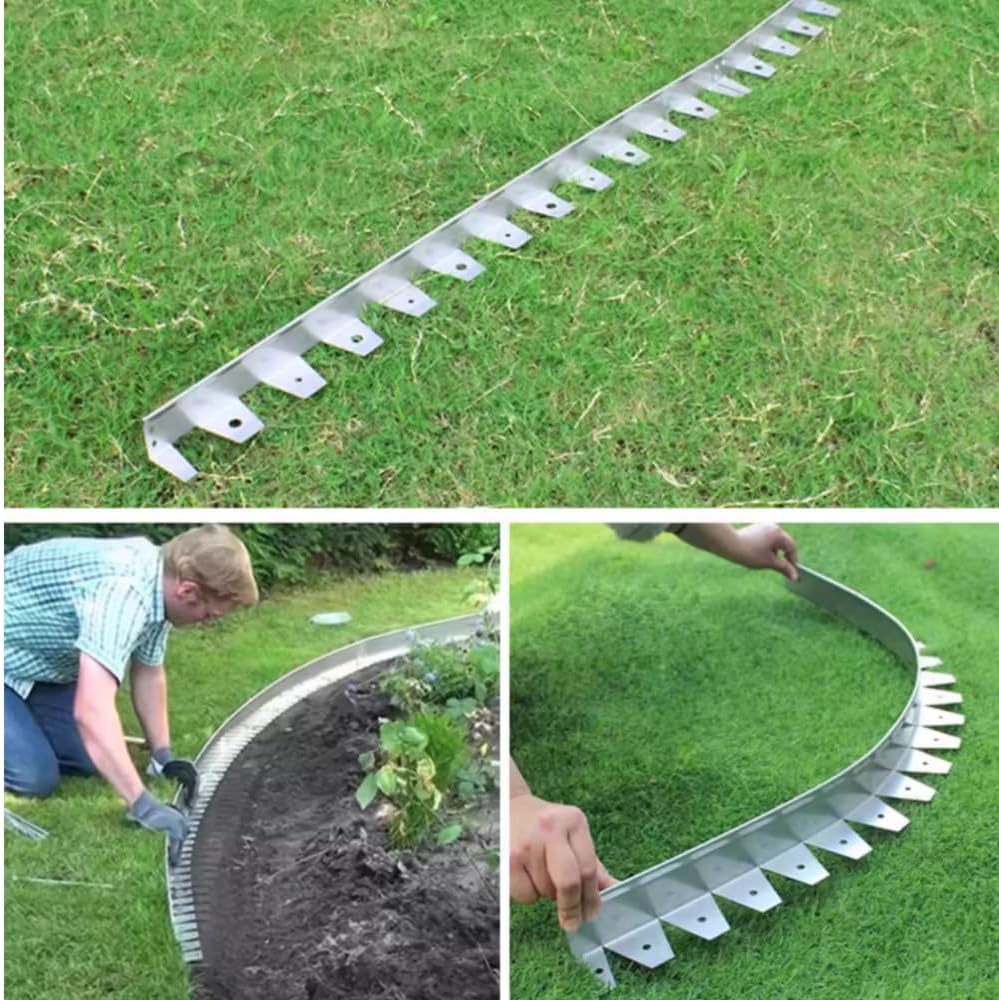
For curved flower bed edging and organic garden border shapes, lay a garden hose along the ground to define your desired curve. Adjust it until you're happy with the shape — stand back and view it from multiple angles, and from the house if the bed is visible from indoors. Mark the final curve with sand or chalk, remove the hose, then install the garden edging along that line. Both corten and stainless steel bend smoothly by hand into gentle curves without kinking; for tighter radii, use two shorter sections joined at the bend point.
Hammer-In Installation (Corten)
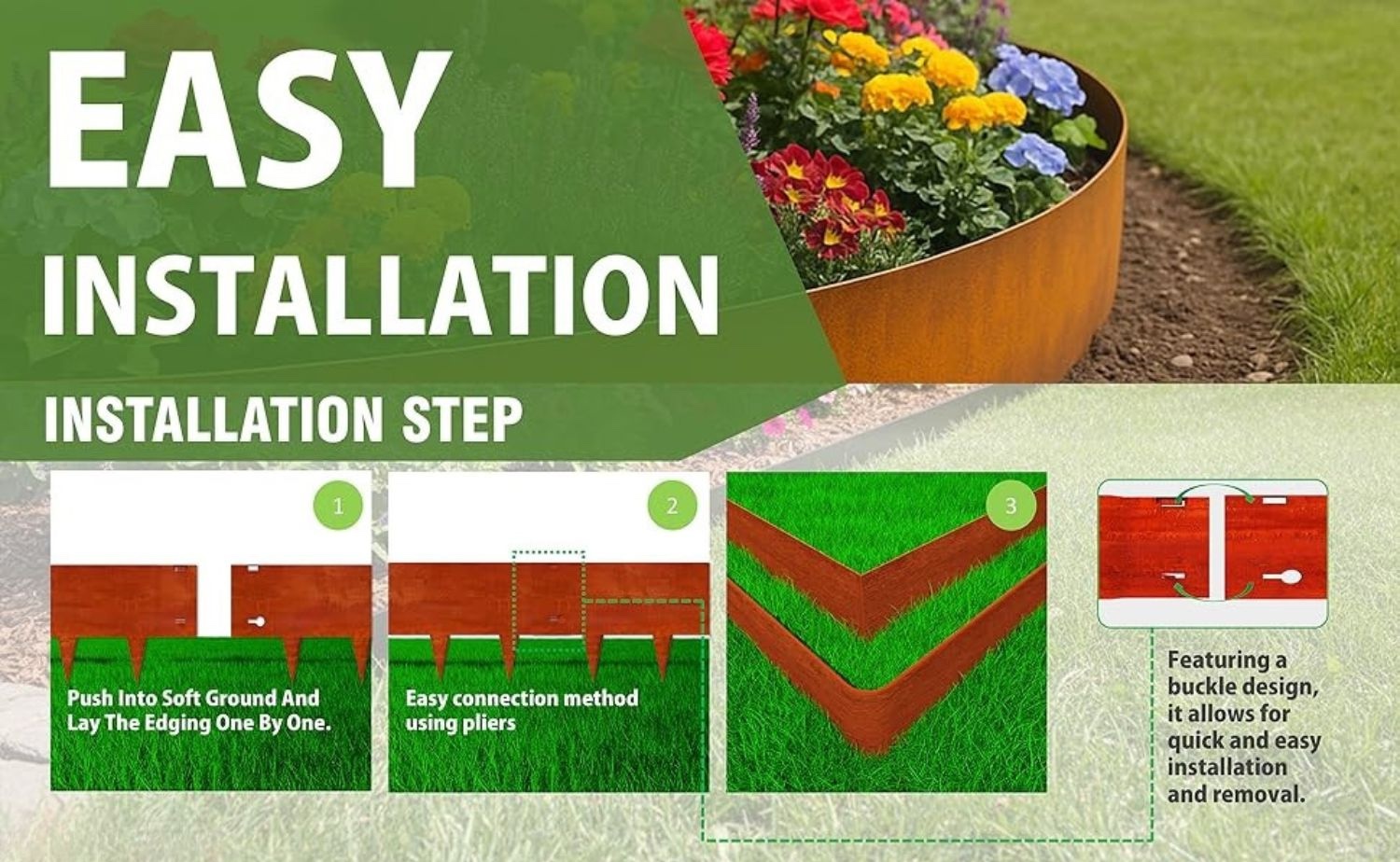
Position each strip along your marked line. Place a scrap piece of 2x4 lumber flat along the top edge — this distributes mallet force evenly and prevents the steel from distorting. Drive the integrated anchor stakes into the ground with firm, even mallet blows, checking vertical alignment as you progress. Continue along the border, connecting strips using the stake overlap design.
Stake-Through Installation (Stainless)
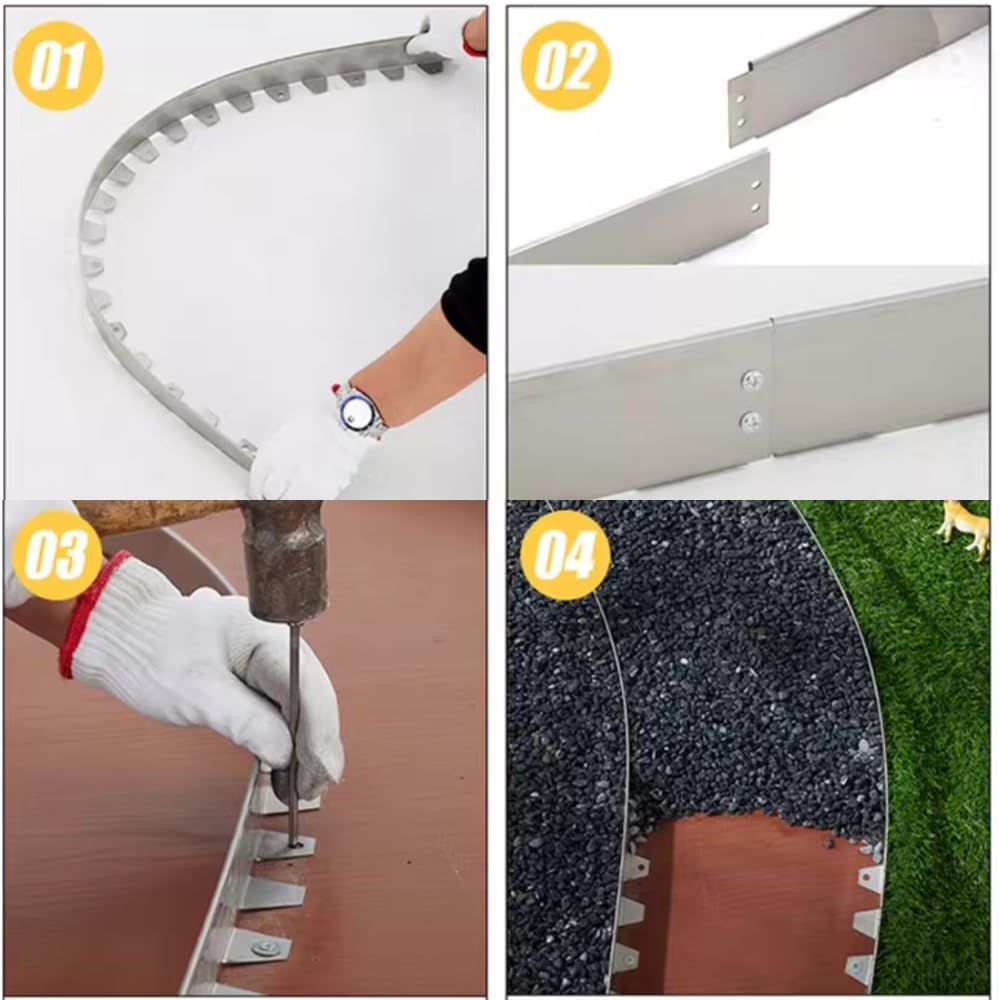
Position each strip along your marked line. Drive the included fixing stakes through the pre-drilled holes into the ground using a mallet. Connect adjacent strips using the included connector sheets, fastening with the provided screws and nuts. The pre-drilled hole placement ensures consistent stake spacing throughout the installation.
Finishing
Once all edging borders for gardens are in position, backfill any gaps on the outer face with soil and firm gently. Dress mulch or gravel on the bed side up to — but not over — the top edge of the installed steel. The contrast between the crisp metal line and the surrounding material is the moment the whole installation comes together. It's one of the most satisfying moments in garden design.
Design Ideas: Garden Edges and Borders That Transform Outdoor Spaces
Metal garden edging works across a wide range of garden styles and applications. These are the uses that consistently deliver the most dramatic visual improvements.
Flower Bed Borders — The Classic Application
Installing flower bed edging along the interface between lawn and planting beds is the single highest-impact thing most homeowners can do to their garden. A clean steel flower bed border defines the shape of the planting, contains mulch and bark, prevents grass encroachment, and allows the lawn to be mowed right up to the edge without the tedious follow-up trimming. The visual difference between an edged and unedged flower bed border is dramatic — the former looks designed, the latter looks maintained.
Lawn Edging Along Paths and Driveways
Steel lawn edging alongside gravel paths, resin driveways, or paved surfaces provides both structural containment and visual framing. Gravel paths without edging gradually lose their definition as material migrates onto adjacent surfaces — metal landscape border eliminates this. Formally edged paths and driveways also create the clear circulation logic that transforms a garden from a collection of areas into a designed space.
Steel Garden Bed Edging Around Raised Beds
Used as a ground-level finishing border around raised planting structures, steel garden bed edging provides the clean transition between the bed footprint and surrounding lawn or path. It defines the mulched zone at the base of the structure, prevents grass competition, and gives the whole raised bed a tailored, considered appearance. Because grade 304 stainless steel is food-safe, it's particularly well-suited to kitchen garden and vegetable bed applications.
Garden Border Edging for Rock Gardens and Gravel Areas
Defining the boundary of rock gardens, gravel zen gardens, and decorative stone areas with metal garden border creates the crisp separation that makes these features read clearly in the landscape. Without defined garden border edging, the line between gravel and lawn becomes blurred within a season as materials migrate; with steel edging in place, the boundary stays precise indefinitely.
Curved Edging for Organic Garden Shapes
Free-flowing, organic garden shapes — island beds, sweeping borders, curved pathways — are one of the most effective landscape design moves available to homeowners. The challenge is maintaining the precision of those curves over time as soil shifts and lawn grasses advance. Properly installed curved edging in corten or stainless steel holds those flowing lines permanently, preserving the design intent of the garden without annual re-cutting.
Long-Term Value: Why Steel Metal Edging Landscaping Pays for Itself
The cost argument for premium steel metal edging landscaping becomes clear when you calculate it over a realistic ownership period rather than at the point of purchase.
The True Cost of Cheap Landscape Edging
Plastic landscape edging at $20–$40 per 20-foot section sounds economical. But replaced every 4 years — a realistic interval for most climates — that's $50–$100 over 10 years for the same 20-foot run, plus the time spent on repeated removal and reinstallation. Painted steel edging performs similarly, with the added problem of progressively worsening rust compromising both appearance and structural integrity. These hidden costs are rarely factored into the initial purchasing decision.
The Steel Landscape Edging Calculation
Our corten steel landscape edging at $129 for 20 feet has a realistic service life of 25–50 years under normal conditions. That's under $5 per year at the conservative end. Our stainless steel garden edging at $99 for 33 feet — with a grade 304 specification that should outlast the garden itself — costs under $3.30 per year over 30 years. At these numbers, the premium steel option is not just the most attractive and lowest-maintenance choice; it's the most economical one when measured correctly.
The real comparison: Plastic edging replaced every 4 years costs 3–4x more per decade than quality steel garden edging — before factoring in the time and effort of repeated installation. The upfront price difference is recovered within the first replacement cycle.
Choosing the Right Landscape Edging for Every Garden Style
The best garden edging choice is the one that integrates naturally with your garden's design language — reinforcing the overall aesthetic rather than creating visual noise. Here's a style-by-style guide.
Contemporary and Minimalist Gardens
Stainless steel lawn edging is the defining choice for clean, minimal spaces. The bright, neutral silver holds the colour temperature of the space without competing with planting or hardscape materials. Clean straight runs and precisely executed curves both look at home in contemporary design — the material has enough visual presence to register as a deliberate design element without dominating.
Naturalistic and Prairie Gardens
Corten steel landscape edging is the natural material for these spaces. The warm rust palette mirrors the tones of ornamental grasses, dried seed heads, and autumn foliage — the edging feels like it grew there rather than was installed. The evolved patina reinforces the sense of time and place that naturalistic garden design seeks to create.
Formal and Traditional Gardens
Either material works in formal garden design, with the choice depending on the warmth of the palette. Corten suits warm-toned formal schemes with red brick, terracotta, and warm stone; stainless suits cooler-toned formal gardens with grey stone, white render, and blue-grey planting schemes. Both provide the precision and permanence that formal garden borders and edging demand.
Kitchen and Productive Gardens
For vegetable gardens, herb beds, and mixed productive spaces, stainless steel garden edging is the superior specification — grade 304 is certified food-safe and doesn't leach any compounds into adjacent growing medium. Used as steel garden bed edging around raised structures, pathway edging between beds, or flower bed borders defining the ornamental from the edible areas, stainless provides clean, hygienic, and permanent definition.
Making Your Decision: A Final Summary
Landscape edging is not a complicated purchase — but the wrong choice costs time, money, and effort that compounds over years. The right choice installs once, performs without compromise, and makes your garden look better from the first day to the last.
American Edging carries two products because two materials solve two design briefs equally well. Corten steel landscape edging for warmth, character, and natural evolution. Stainless steel lawn edging for precision, brightness, and contemporary clarity. Both are zero-maintenance. Both install without digging or specialist help. Both cost less per year than any plastic or painted alternative when calculated honestly.
Whether you're defining a single flower bed border, creating curved edging around an island bed, framing a pathway, or establishing garden borders across an entire property — we have the product, the coverage, and the quality to do it right, once, and for good.